Introduction
Retail supply chains depend heavily on knowing what customers want, where they want it, and when demand spikes. Consumer purchasing behavior across ZIP codes has become one of the most valuable signals in modern grocery retail. With Extract Instacart ZIP Code Data for Product Demand Analysis, retailers can now map product preferences at the hyper-local level and make distribution decisions backed by real numbers rather than assumptions. Grocery Data Scraping Services offer a structured path toward accessing this critical layer of marketplace intelligence consistently.
Understanding demand variation at the ZIP code level matters because two neighborhoods just miles apart can show completely different buying patterns. Without precise geographic visibility, brands often either overstock underperforming areas or leave high-demand zones under-supplied, both outcomes eating into profitability. Real-Time Instacart ZIP Code Data Insights make it possible to track these micro-level trends continuously and adjust inventory positioning before losses accumulate.
Rather than waiting for stockout reports or customer complaints to signal a supply problem, retailers who invest in data-driven approaches can anticipate demand surges before they create friction. Instacart ZIP Code Product Data Extraction provides the granular input that transforms guesswork into a strategic planning asset, helping procurement teams align purchasing volumes with actual ground-level demand across every active region.
The Client Story
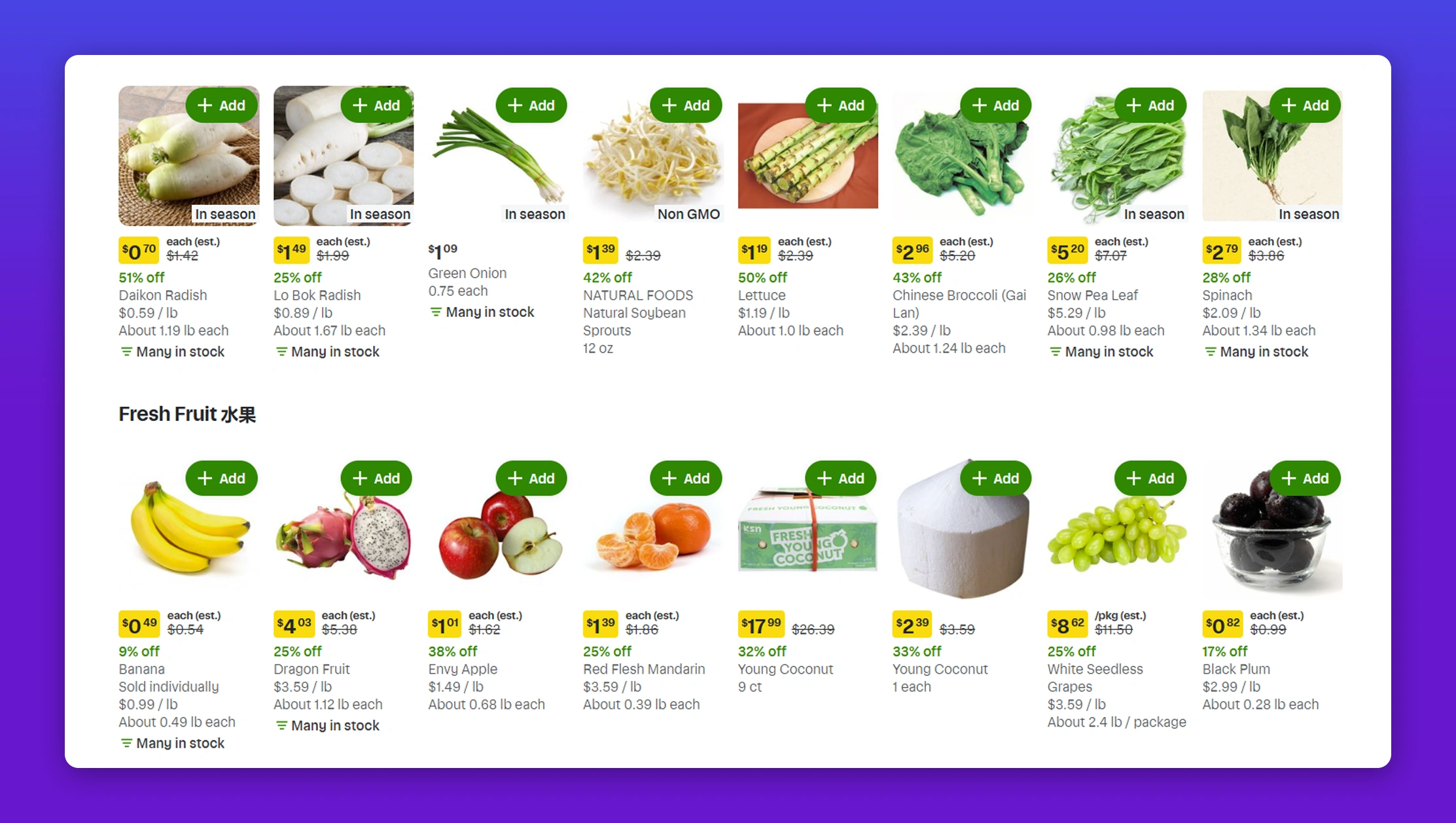
A mid-sized consumer packaged goods brand operating across multiple states recognized that their existing supply planning model was falling short. Despite having a reasonably strong retail presence on Instacart, their teams struggled to correlate actual demand patterns with specific delivery zones. The need to Extract Instacart ZIP Code Data for Product Demand Analysis became clear when several high-demand ZIP codes repeatedly showed stockouts while nearby zones accumulated excess inventory.
Their internal data team had been experimenting with manual monitoring, but the scale of coverage required across dozens of markets made the process unsustainable. The client specifically wanted visibility into which product categories surged in specific areas during weekends, promotional windows, and seasonal cycles. Scrape Instacart ZIP Code Data Analysis was identified as the foundational method that would enable them to build this visibility at scale without overwhelming internal resources.
Beyond inventory balancing, the client also wanted to understand competitor product availability by ZIP code, giving their sales team context for regional pricing and promotional planning. Instacart ZIP Code Data Scraping API for Retail Insights aligned perfectly with their infrastructure needs, as it allowed seamless data ingestion directly into their planning dashboards, reducing the lag between data collection and decision-making significantly.
The Challenges
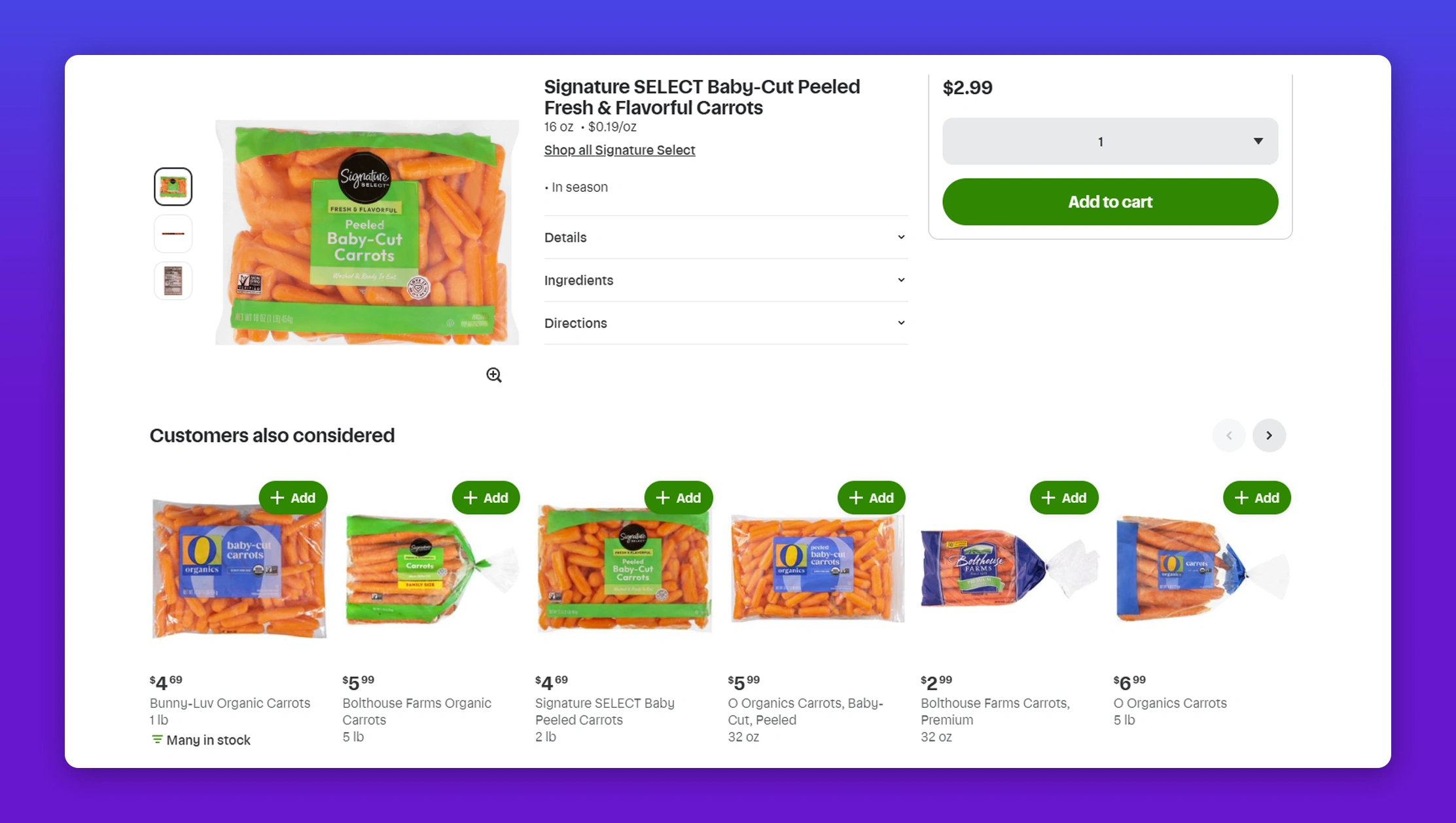
Before engaging with us, the client's supply team operated in an information vacuum when it came to regional demand behavior. Their planning team often flagged recurring inventory mismatches, but without structured geographic data, root causes remained speculative. This gap between operational reality and available intelligence was costing them both revenue and customer retention.
The absence of Real-Time Instacart ZIP Code Data Insights meant that by the time demand signals were visible through traditional reporting, the window to act had already passed. The client needed a faster, more precise mechanism to bridge this information lag.
Key challenges that defined their operational difficulties included:
- No structured process to capture ZIP-code-level product demand shifts within active delivery windows.
- Dependence on lagging sales reports that failed to reflect current consumer purchasing behavior.
- Inability to benchmark competitor product availability across overlapping delivery zones.
- Fragmented inventory allocation across regional warehouses due to missing hyper-local demand data.
- Missed revenue during promotional spikes because supply positioning wasn't aligned with localized surge patterns.
The Solutions
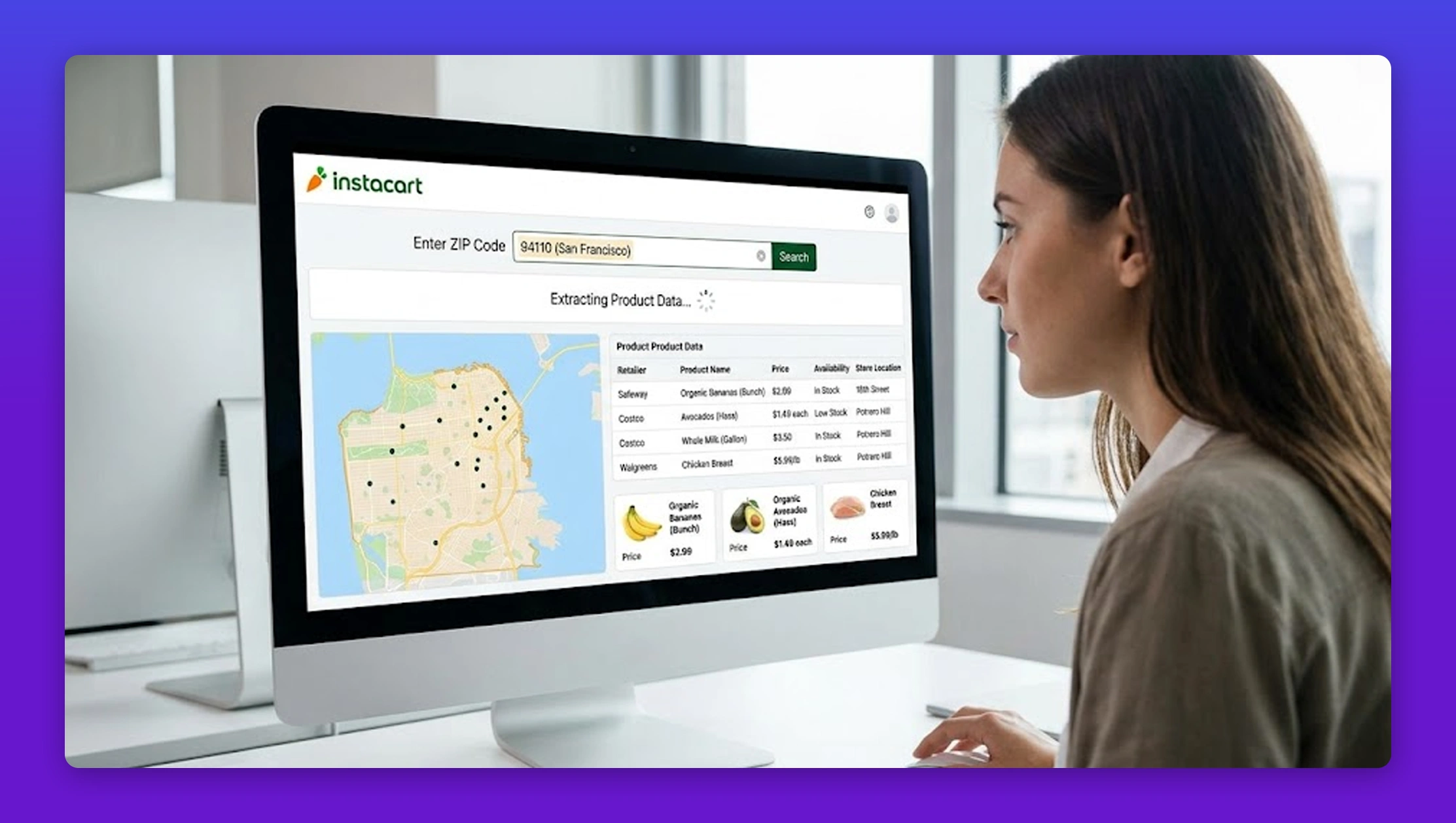
We designed a structured data extraction ecosystem tailored to the client's geographic scope and business objectives. The team began by mapping the client's active delivery markets and building targeted extraction workflows aligned to specific ZIP code clusters.
Rather than pulling broad platform data, the solution focused on demand-relevant signals including product availability, order frequency indicators, and out-of-stock patterns tied directly to location identifiers. This precision-first approach ensured the extracted data was immediately actionable for supply planning decisions.
The solutions deployed for the client included:
- Instacart ZIP Code Product Data Extraction pipelines built to capture product-level demand signals across hundreds of ZIP codes simultaneously without interruption.
- Automated scheduling systems that refreshed data at intervals aligned with the client's restocking cycles, ensuring supply teams always worked from current information.
- Integration of Scrape Instacart ZIP Code Data Analysis workflows connected directly to the client's warehouse management dashboards for real-time inventory alignment.
- For deeper context on platform-level data collection methods, the team also referenced Instacart Data Scraping for Grocery Price and Stock Updates techniques to enrich the competitive benchmarking layer.
- Structured reporting modules that converted raw ZIP code demand data into visual trend maps, helping regional managers prioritize restocking actions by urgency and volume.
The combined architecture eliminated the manual bottlenecks that had previously slowed the client's planning cycle. With every layer of the pipeline automated and validated, the client could shift from reactive supply management to a genuinely predictive distribution model that improved week over week.
Demand Intelligence Breakdown by ZIP-Level Analysis
| Analysis Category | Coverage Scope | Refresh Cycle | Accuracy Rate | Business Impact |
|---|---|---|---|---|
| Product Demand Mapping | 500+ ZIP Codes | Every 6 Hours | 94% | Reduced stockouts by 38% |
| Competitor Stock Monitoring | 12 Metro Markets | Daily | 91% | Improved promo timing by 27% |
| Seasonal Surge Detection | Regional Clusters | Weekly | 89% | Cut overstock losses by 22% |
| Category Trend Tracking | 80+ SKUs | Bi-Weekly | 93% | Boosted forecast accuracy by 31% |
| Delivery Zone Benchmarking | 200+ Active Zones | Real-Time | 96% | Reduced allocation errors by 41% |
The data captured through this structured approach gave the client's supply team a reliable foundation for every major inventory decision. Price Intelligence Services further enriched the dataset by layering competitive pricing context alongside demand trends, enabling more nuanced promotional decisions.
By connecting geographic demand data with category-level performance metrics, the client significantly improved their fill rates across the highest-priority delivery markets, translating directly into better customer experience scores and measurable revenue recovery.
Benefits of Choosing Web Fusion Data

Retailers working across competitive grocery marketplaces need more than raw data. They need a structured partner that understands how location-specific signals translate into operational decisions.
-
Geographic Demand Precision
Using Instacart ZIP Code Data Scraping API for Retail Insights, businesses can isolate demand behavior at the neighborhood level, allowing supply teams to allocate inventory with surgical accuracy rather than broad regional estimates. -
Faster Decision Cycles
Automated data pipelines reduce the time between a demand signal appearing on the platform and reaching the client's planning team, compressing decision windows from days to hours. -
Competitive Visibility Advantage
Monitoring competitor product availability across shared ZIP codes gives sales and procurement teams a strategic context that improves both pricing decisions and promotional timing. -
Scalable Extraction Architecture
Solutions are built to expand alongside a client's geographic footprint, meaning as new markets open, the data infrastructure scales without requiring complete rebuilding. Web Scraping Services designed with scalability in mind ensure continuity as business needs evolve. -
Cleaner Data for Smarter Analytics
Every extracted dataset undergoes validation before delivery, ensuring the numbers feeding into planning dashboards are structurally clean and free of duplications that could skew demand projections. -
Reduced Inventory Imbalance Costs
By matching supply positioning to actual localized demand, clients consistently reduce overstock in low-demand zones while eliminating the recurring stockouts that damage customer trust in high-demand areas.
Client Testimonials
Working with Web Fusion Data gave our supply planning team a completely new level of clarity. Through Extract Instacart ZIP Code Data for Product Demand Analysis, we finally had the geographic granularity we needed to make smarter restocking decisions. The structured outputs powered by Real-Time Instacart ZIP Code Data Insights helped our regional managers act faster and with more confidence than they ever had before.
– Director of Supply Chain Planning, Consumer Packaged Goods Brand
Conclusion
The results achieved through this engagement confirmed that location-specific data extraction fundamentally changes how supply chains function. Extract Instacart ZIP Code Data for Product Demand Analysis remains one of the most direct paths a retail brand can take toward achieving consistent supply-demand alignment across diverse geographic markets.
Combining this capability with Scrape Instacart ZIP Code Data Analysis ensures that both historical patterns and emerging trends contribute equally to every planning decision made downstream. Contact Web Fusion Data today to discover how our tailored data extraction solutions can solve your supply chain visibility challenges.