Introduction
Modern retail brands operate across dozens of digital storefronts simultaneously, making manual catalog tracking impossible. Relying on spreadsheets leads to missed price drops and outdated inventory figures. Implementing Automated Multi-Marketplace Product Data Collection empowers teams to monitor competitor shifts and maintain accurate SKU records across every major online sales channel effortlessly.
Global online shoppers compare prices across multiple platforms before completing a single purchase. Brands that fail to synchronize their catalog intelligence risk losing buy-box visibility and eroding profit margins. Adopting structured Ecommerce Data Scraping ensures your pricing and merchandising teams receive clean, daily updates without tedious manual verification.
Accurate product tracking requires unifying disparate data formats, regional currencies, and varying seller attributes into one clean feed. When enterprises standardize their extraction pipelines, they eliminate blind spots across third-party marketplaces. Let us examine how modern automation frameworks solve cross-platform tracking challenges and drive measurable commercial performance.
Centralizing Catalog Visibility and Pricing Trends Across Channels

Tracking identical items across Amazon, Walmart, eBay, and regional storefronts requires normalizing inconsistent titles, UPCs, and seller identifiers across every digital shelf. Without unified ingestion pipelines, analysts spend up to 65% of their week cleaning raw exports instead of analyzing market shifts. Implementing Multi-Marketplace Price Monitoring transforms fragmented listings into structured, comparable datasets that reveal competitive positioning immediately.
According to recent industry benchmarks, retail organizations utilizing automated tracking systems detect competitor price changes 84% faster than teams relying on manual audits. When category managers Scrape Product Data Across Ecommerce Platforms , they consistently report a 19% improvement in dynamic repricing accuracy during peak promotional windows and seasonal sales events.
- Standardize regional currencies and unit measurements across international retail storefronts automatically.
- Detect unauthorized third-party sellers and Minimum Advertised Price violations before revenue erodes.
- Synchronize historical price fluctuations with competitor inventory depletion rates across regions.
| Tracking Dimension | Manual Spreadsheet Audits | Automated Pipeline Tracking |
|---|---|---|
| Update Frequency | Weekly or bi-weekly snapshots | Continuous hourly or daily syncs |
| SKU Matching Accuracy | ~72% due to title variations | 98.5% via GTIN/ASIN normalization |
| Attribute Coverage | Basic price and title only | Price, stock, seller rank, reviews, specs |
| Error Rate | High (manual copy-paste errors) | Near zero with automated validation |
By consolidating catalog metrics through Marketplace Product Data Aggregation , merchandising teams gain a unified view of regional stockouts and promotional discounts. This structured visibility ensures pricing engines react to verified market movements rather than delayed manual reports, protecting profit margins while sustaining strong buy-box ownership across every target retail channel.
Scaling Extraction Infrastructure with High-Speed Cloud Data Pipelines

Modern retail websites deploy dynamic JavaScript rendering, strict geo-blocking, and sophisticated anti-bot defenses that quickly break basic internal scripts. Enterprise engineering teams overcome these technical hurdles by integrating a dedicated Ecommerce Scraping API directly into their internal business intelligence workflows, ensuring uninterrupted access to public catalog pages across global regions.
Industry telemetry shows that enterprise data pipelines powered by Real-Time Ecommerce Data Collection achieve 99.4% uptime even during high-traffic retail events like Black Friday and Prime Day. Businesses utilizing automated extraction endpoints reduce data engineering maintenance overhead by 52% compared to maintaining fragile in-house headless browser clusters and proxy networks.
- Handle dynamic page rendering and infinite scroll layouts without manual parser rewrites.
- Rotate residential IP addresses automatically to maintain uninterrupted regional storefront access.
- Stream validated JSON and CSV payloads directly into cloud storage warehouses.
| Infrastructure Metric | In-House Scraper Scripts | Dedicated Extraction API |
|---|---|---|
| Anti-Bot Bypass Rate | 60%–75% (frequent IP blocks) | 99.2% with automated proxy rotation |
| Data Delivery Latency | 12–24 hours batch processing | Under 5 minutes real-time streaming |
| Schema Maintenance | Constant manual code rewrites | Self-healing parsers for layout shifts |
| Scalability Limit | Capped by local server capacity | Millions of SKU requests per hour |
Connecting an enterprise-grade Product Data Extraction API eliminates proxy management headaches while delivering structured records directly to internal analytics databases. Seamless technical integration ensures that pricing engines, ERP platforms, and demand forecasting models always ingest fresh marketplace signals without pipeline bottlenecks, latency spikes, or missing product attributes.
Turning Raw Marketplace Feeds into Actionable Retail Insights
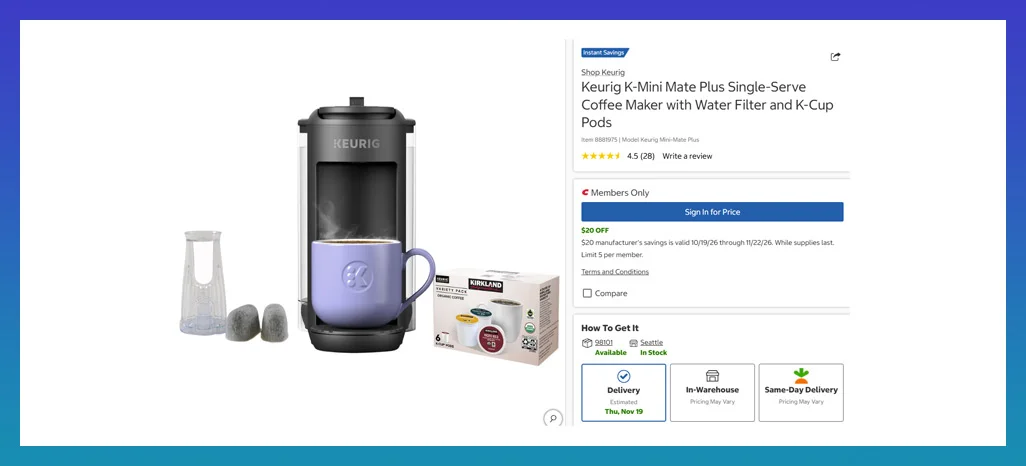
Collecting millions of product rows only creates measurable commercial value when downstream teams can translate raw attributes into decisive business strategies. Deploying an enterprise-grade E-Commerce Scraper allows retail brands to capture granular page metadata, including verified customer sentiment scores, estimated shipping timelines, bundle configurations, and active promotional badges across competing storefronts.
Market research studies indicate that organizations utilizing Ecommerce Data Aggregation Services experience a 23% lift in gross margin optimization and a 31% reduction in excess inventory holding costs. When merchandising teams correlate competitor stockouts with historical demand elasticity, they can adjust advertising budgets and promotional markdowns with surgical precision across every category.
- Benchmark customer review sentiment and star rating velocity against competing brand offerings.
- Identify emerging category gaps and trending product specifications for private-label development.
- Track shipping speed promises and fulfillment methods across third-party marketplace sellers.
| Business Function | Raw Data Input | Strategic Commercial Outcome |
|---|---|---|
| Dynamic Pricing | Live competitor price & shipping fees | Automated buy-box capture & margin protection |
| Assortment Planning | Category SKU gaps & trending attributes | Faster private-label product launches |
| Brand Protection | Unauthorized seller IDs & MAP breaches | Immediate compliance enforcement |
| Supply Chain | Competitor out-of-stock frequency | Proactive inventory reallocation |
Combining daily catalog feeds with Retail Intelligence Data Solutions turns raw web extractions into predictive commercial foresight. Structured cross-channel reporting bridges the gap between technical data collection and executive decision-making, giving retail leaders complete operational clarity to outmaneuver competitors across every active sales channel.
How Web Fusion Data Can Help You?
Scaling cross-marketplace tracking requires reliable data pipelines capable of handling millions of dynamic product pages without interruption. We empower global brands, retailers, and analytics teams with Automated Multi-Marketplace Product Data Collection tailored to complex commercial workflows.
Our engineering team builds custom extraction pipelines that normalize pricing, stock availability, seller ratings, and technical specifications across global and regional marketplaces.
- Custom Multi-Channel Architecture: Build dedicated data pipelines tailored to your exact target marketplaces, categories, and regional storefronts.
- Automated Entity Resolution: Accurately map identical SKUs across different platforms using UPC, EAN, MPN, and intelligent attribute clustering.
- Anti-Bot & Proxy Management: Bypass complex rate limits, CAPTCHAs, and dynamic JavaScript rendering without maintaining internal scraping infrastructure.
- Flexible Delivery Formats: Receive clean, validated datasets via direct cloud storage buckets, webhooks, REST endpoints, or scheduled CSV feeds.
- Real-Time Alerting & Monitoring: Trigger instant notifications whenever competitors adjust prices, launch new variants, or run out of stock.
- Enterprise SLA & Quality Assurance: Rely on multi-stage automated validation checks that guarantee schema consistency and high field-level accuracy.
Partnering with our specialized Product Matching Services ensures your internal analytics platforms receive clean, ready-to-use marketplace intelligence every single day.
Conclusion
Maintaining accurate visibility across rapidly shifting digital marketplaces is essential for protecting profit margins and capturing market share. By adopting Automated Multi-Marketplace Product Data Collection , retail organizations replace fragile manual audits with reliable, continuous catalog intelligence. Integrating Marketplace Product Data Aggregation ensures every pricing, merchandising, and supply chain decision is backed by verified cross-platform data.
Modernizing your market research workflow starts with building a resilient, scalable data foundation that grows alongside your product catalog. Implementing Real-Time Ecommerce Data Collection equips your team with the speed and precision needed to outperform competitors across every digital shelf. Contact Web Fusion Data today to schedule a custom consultation and launch your automated product tracking pipeline.