Introduction
Modern retail intelligence relies heavily on granular, real-time market insights to maintain a competitive advantage. Large supermarket chains like Biedronka constantly update their product assortments, discount strategies, and seasonal campaigns. Accessing this continuous flow of data requires robust extraction methods capable of handling rapidly changing catalog information without operational interruptions.
By leveraging Biedronka Grocery Data Scraping, businesses can monitor price fluctuations and promotional shifts across thousands of product lines. This continuous data capture delivers a clear window into competitive pricing models, allowing retail analysts to respond proactively to sudden market movements and localized discount trends.
To integrate seamlessly with enterprise analytics pipelines, modern teams often deploy a dedicated Biedronka Grocery Data API. This setup delivers direct access to structured datasets, eliminating manual dynamic extraction while ensuring that price, inventory, and promotional metrics remain continuously updated for downstream decision-making.
Technical Architecture Behind Continuous Price Tracking and Inventory Extraction
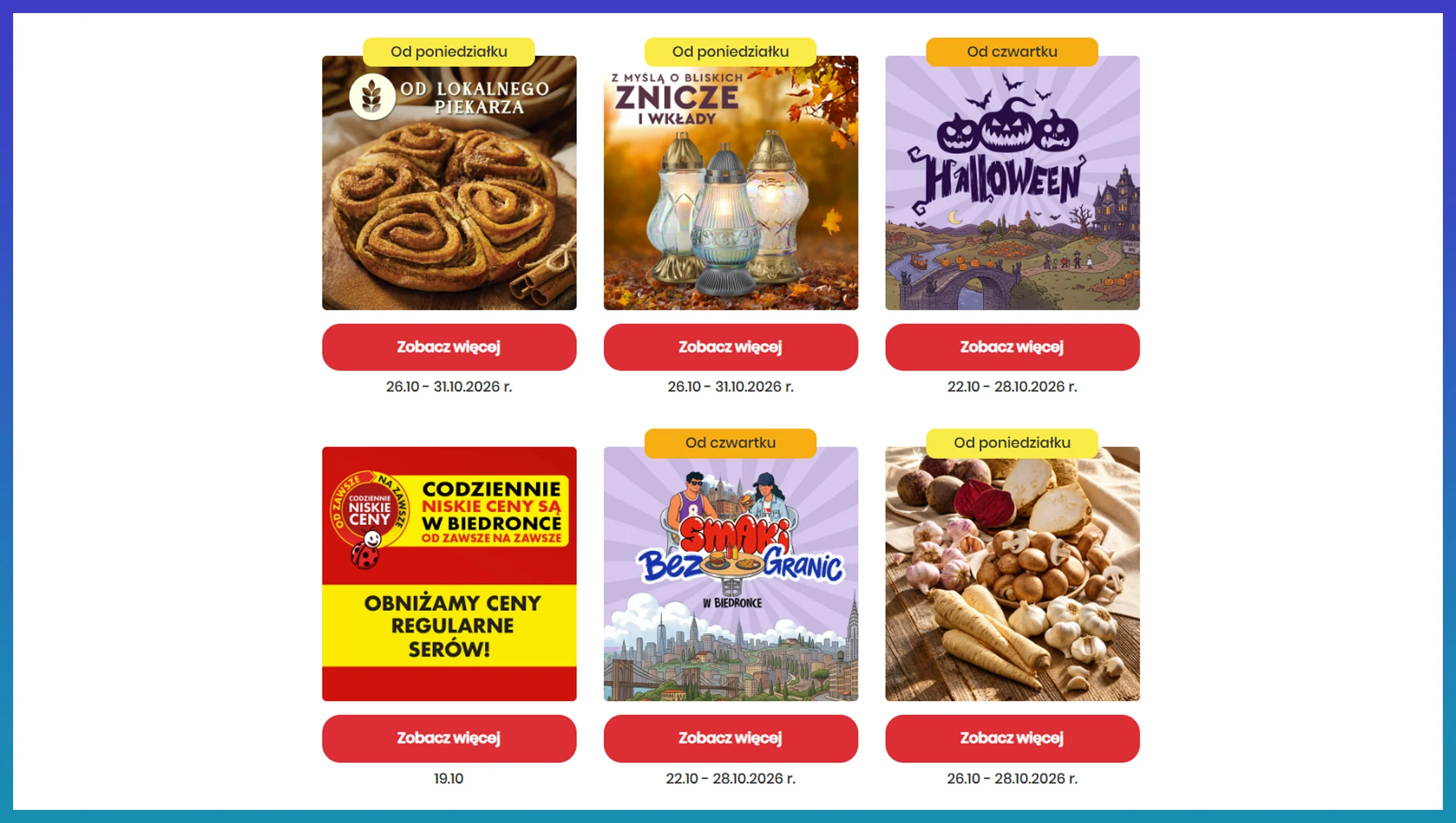
Modern supermarket pricing architectures update rapidly across different regional distribution hubs, creating constant challenges for commercial analytical teams trying to track shelf values manually. Enterprise market intelligence relies on consistent automated pipelines to systematically capture localized cost adjustments across thousands of consumer goods categories. Integrating a reliable Biedronka Grocery Price Tracking API inside modern corporate data infrastructure ensures continuous access to changing values, preventing outdated assumptions from skewing strategic revenue models.
Retail data pipelines digest raw structural changes across e-commerce storefronts to prevent downstream analytical errors during automated aggregation tasks. Scrapers clean unstructured raw HTML into predictable records that plug directly into predictive pricing dashboards and automated reporting software. Enterprise teams systematically Collect Biedronka Supermarket Pricing Data across structured intervals, transforming raw price feeds into actionable trends for category managers and pricing strategists.
- Automated extraction pipelines capture intraday updates to prevent operational lag.
- Normalized datasets allow direct cross-retailer pricing models and SKU mapping.
- Structured data feeds stream cleanly into corporate warehouse architectures.
| Category | Average Baseline Price (PLN) | Promotional Discount Range | Discount Frequency |
|---|---|---|---|
| Fresh Produce | 8.50 | 12% - 25% | Weekly |
| Dairy & Dairy Alternatives | 5.20 | 10% - 18% | Bi-weekly |
| Packaged Foods | 12.90 | 15% - 30% | Monthly |
| Household Supplies | 22.00 | 8% - 20% | Seasonal |
Continuous catalog extraction requires robust proxy management and anti-bot mitigation strategies to ensure uninterrupted data collection runs. Commercial scrapers handle headless browser rendering, rate limiting, and dynamic web components without triggering anti-scraping defenses. Systematically monitoring retail inventory prevents stockouts from misleading pricing models and provides clarity on broader supply chain stability across regional grocery outlets.
Granular Data Standardisation for Accurate Cross Retailer Product Benchmarking
Analyzing complex retail catalogs demands comprehensive visibility into deep product metadata alongside real-time shelf prices. Standardizing unstructured web information into unified schemas allows commercial analysts to compare brand tiers, package sizing, and volume metrics efficiently across competing supermarket chains. Utilizing a specialized Biedronka Price Monitoring API ensures that extracted metadata—such as unit weight, brand tier, and package sizing—remains linked directly to pricing adjustments.
High-density product extraction enables retail managers to identify micro-trends in packaging adjustments and unit-price variance before they impact broad market share. Clean data pipelines normalize localized weight metrics, allowing direct comparisons between private-label items and leading national consumer brands. Organizations also use automated scrapers to Scrape Biedronka Product Data, converting unstructured store pages into clean, tabular formats ready for immediate analytical processing.
- Normalized unit pricing calculations reveal hidden inflationary packaging adjustments.
- Barcode extraction simplifies automated matching across regional competitor inventories.
- Historical catalog archiving tracks long-term product line modifications.
| Product Data Field | Extraction Accuracy Rate | Business Application |
|---|---|---|
| Global Trade Item Number (GTIN) | 99.4% | Cross-retailer catalog matching |
| Unit Price / Weight | 98.8% | Normalized price comparison |
| Promotional Tag / Banner | 97.5% | Retail promotion effectiveness |
| In-Stock Status | 96.2% | Regional stock level assessment |
Enterprise intelligence platforms rely on robust identity resolution techniques to map identical items across distinct retail catalogs. Reliable web scrapers capture barcode identifiers, nutritional specifications, and regional availability tags to build detailed competitive maps. Maintaining continuous metadata linkage protects analytical dashboards from corruption when target sites alter their online layout structures.
Automated Promotional Cycle Tracking to Strengthen Strategic Retail Intelligence
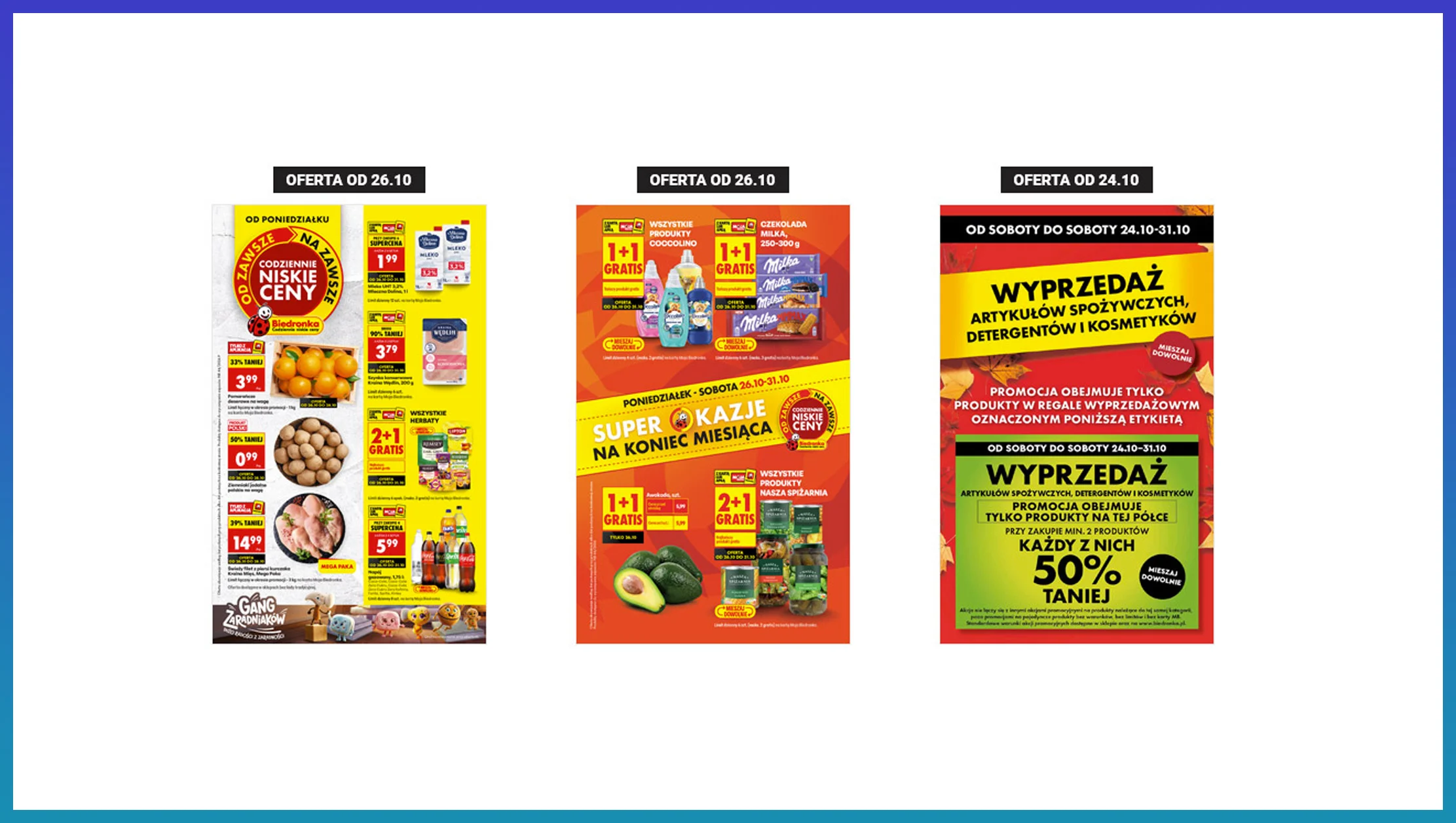
Promotional cycles in mass-market grocery environments rotate frequently, rendering manual audits inefficient and vulnerable to extensive human error. Web scrapers systematically detect temporary cost reductions, multi-buy bundles, and loyalty card specials as soon as digital storefronts publish updated marketing circulars. By deploying tools to Automate Biedronka Promotion Tracking, category managers receive immediate alerts when competitors launch aggressive pricing campaigns, enabling faster tactical counter-promotions.
Commercial pricing teams analyze historical promotional data to anticipate competitor discounting strategies during major holidays and seasonal shopping periods. Automated monitoring provides clear insights into regional campaign durations, discount levels, and the product categories included in each promotion. By integrating a Biedronka Web Scraping Service into their research process, manufacturers and competing retailers can identify recurring promotional patterns, refine their pricing strategies, and plan campaigns that support stronger sales performance and revenue growth.
- Automated campaign tracking detects short-term flash sales before catalog expiration.
- Categorized deal parsing separates volume discounts from simple cost markdowns.
- Historical promotional records enable predictive modeling for future retail events.
Businesses implementing systematic Biedronka Product Data Extraction gain a decisive edge by observing discount patterns over long temporal horizons across diverse regional markets. Sophisticated monitoring systems aggregate campaign mechanics to reveal whether volume gains offset margin compression during heavy discount events. Converting web-based promotional banners into structured metrics accelerates tactical responses across modern commercial enterprise organizations.
How Web Fusion Data Can Help You?
Modern enterprise retail decisions depend heavily on fresh, uninterrupted data streams. Relying on manual aggregation or fragile internal scraping scripts often leads to broken pipelines, incomplete datasets, and wasted developer hours.
Our specialized infrastructure simplifies high-volume web extraction by delivering pre-built pipelines tailored for grocery platforms. Implementing accurate Biedronka Grocery Data Scraping workflows ensures your analytics engine receives clean, pre-validated market intelligence around the cloud.
- Seamless integration with existing cloud platforms and storage buckets.
- Automatic IP rotation and anti-bot mitigation for uninterrupted access.
- Tailored output formats including JSON, CSV, and database feeds.
- Continuous schema maintenance to adapt to target website updates.
- Enterprise-grade uptime guarantees with strict data quality validation.
- Scalable infrastructure capable of tracking millions of SKUs concurrently.
Through robust Price and Stock Monitoring Solutions, we handle the underlying technical complexities so your analytics team can focus on strategy, pricing optimization, and competitive expansion.
Conclusion
Navigating the dynamic grocery retail landscape demands continuous visibility into competitor strategies, promotional campaigns, and catalog changes. Relying on outdated data extraction tools leads to missed pricing opportunities, inefficient assortment planning, and reduced profit margins in hyper-competitive markets.
By integrating structured Biedronka Grocery Data Scraping into your daily analytics operations, your organization secures the real-time insights required to optimize pricing rules and stock management. Utilizing reliable Biedronka Price Scraping techniques guarantees that your business maintains a sharp competitive advantage across every retail segment. Partner with Web Fusion Data today to transform public web data into your primary competitive edge.