Introduction
Navigating the dynamic landscape of modern retail requires real-time access to accurate pricing and inventory metrics. Australian retailers and data analysts face significant hurdles when manually monitoring competitive shelf prices across thousands of SKU listings daily. Implementing modern Coles API Integration Services provides a seamless connection to live shelf data without missing critical updates.
Dynamic price fluctuations require fast and reliable monitoring systems to maintain business competitiveness. By utilizing Coles Grocery Price Tracking, businesses eliminate accurate data gaps and replace outdated manual collection methods. This automated process converts raw retail web listings into structured intelligence, enabling dynamic pricing models and quick competitive positioning.
Scaling data collection across continuous product updates demands enterprise-grade stability. Automated data feeds process live product catalogs, inventory changes, and weekly discount campaigns effortlessly. Organizations leveraging robust API endpoints maintain continuous operational visibility while minimizing bandwidth usage and structural data ingestion errors.
Streamlining Automated Large Scale Supermarket Product Catalog Data Extraction Pipeline
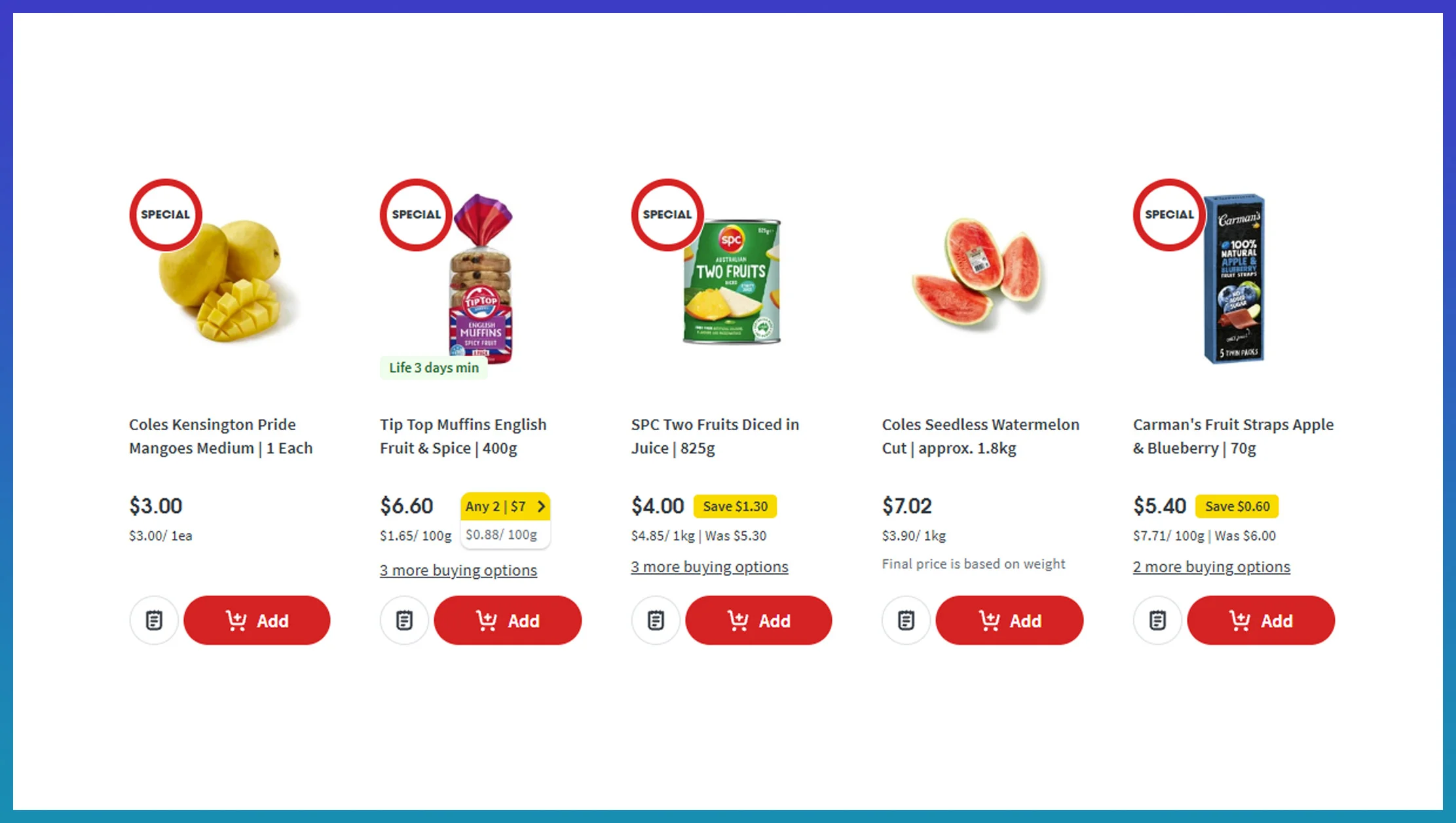
Navigating the vast digital shelf space of modern Australian retail chains requires continuous visibility into thousands of product variations. Retail analysts facing complex web architectures often struggle to collect accurate product details manually across multiple digital storefronts. Implementing dedicated Grocery Data Scraping Services simplifies the overall data acquisition workflow, allowing engineering teams to capture standardized information efficiently.
Modern extraction tools automatically clean complex web scripts, transforming messy HTML files into structured database records. Managing frequent catalog changes requires structured architecture capable of parsing high-volume web payloads without technical failure. By deploying a specialized Coles Product Data API, technical teams establish continuous data pipelines that automatically ingest full product descriptions, localized store pricing, and unique SKU identifiers.
Structured pipelines prevent data loss caused by unexpected site updates or structural layout revisions. As a result, businesses preserve historical product tracking while gathering daily updates on new items and package sizes.
| Metric | Manual Scraping | API Ingestion |
|---|---|---|
| Processing Speed | 120 SKUs / Hour | 50,000+ SKUs / Hour |
| Accuracy Rate | 84.5% | 99.9% |
| Failure / Block Rate | High (42%) | Low (<1%) |
- Automates end-to-end payload normalization to build standardized SKU records continuously across departments.
- Minimizes data ingestion errors by capturing barcode numbers, packaging details, and brand hierarchy tags.
- Accelerates processing speeds to support large-scale competitor catalog mapping and cross-retailer product matching.
Enterprise platforms require high system uptime and low latency when querying extensive digital supermarket catalog listings continuously. Automated retrieval pipelines handle IP management and request rate throttling seamlessly, ensuring steady data delivery across peak operational hours. Commercial software applications consume these clean payloads to perform deep product categorization, cross-brand comparison, and market gap analysis.
Enhancing Nationwide Store Level Inventory Tracking And Stock Availability Monitoring
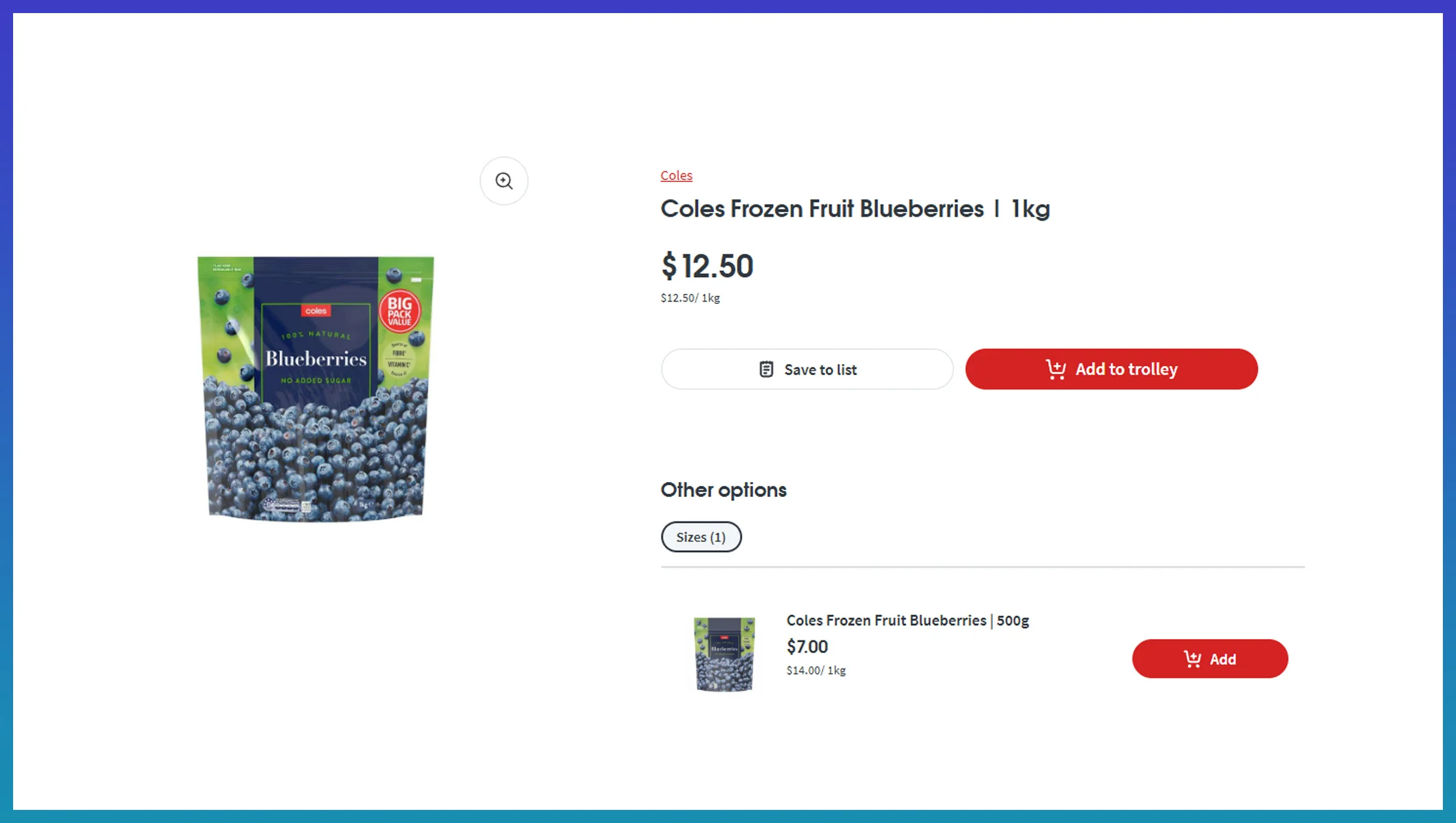
Localized inventory fluctuations significantly influence regional pricing strategies, consumer fulfillment success, and competitive supply chain evaluations. Monitoring store-specific availability manually across hundreds of physical retail locations remains virtually impossible without direct endpoint connectivity. Integrating a targeted Coles Product Availability API empowers commercial operations teams to track regional warehouse stock levels and localized shelf presence continuously.
Automated tracking provides instant operational clarity regarding regional stockouts, product allocations, and distribution patterns. Managing regional query loads requires scalable cloud systems capable of tracking thousands of individual store locations simultaneously. Businesses relying on Grocery Scraper Services often experience network blocks or rate limits when attempting to query multiple regional storefronts concurrently.
Employing direct data integration services ensures reliable access to store-level inventory data while maintaining request compliance. Data teams easily track product movement, local store fulfillment speeds, and regional stock exhaustion trends across nationwide networks.
| Parameter | Standard Polling | Live API Tracking |
|---|---|---|
| Store Locations Tracked | Limited (10-15) | Full Network (800+) |
| Refresh Frequency | Daily | Near Real-Time |
| Out-of-Stock Detection | Delayed (24 Hours) | Instantaneous |
- Tracks localized store fulfillment status continuously to identify regional supply chain bottlenecks before sales drop.
- Identifies out-of-stock items and product substitutions automatically to maintain accurate regional inventory records.
- Delivers continuous updates on local store availability to optimize e-commerce delivery platforms and logistics routing.
Operational visibility into local stock availability protects consumer satisfaction and optimizes delivery logistics for third-party platforms. Ingesting instant store updates allows pricing models to react dynamically when specific regions experience unexpected inventory drops. Supply chain analysts leverage historical stock patterns to forecast regional demand surges and streamline stock replenishment schedules.
Optimizing Real Time Price Adjustments And Weekly Promotional Discount Insights
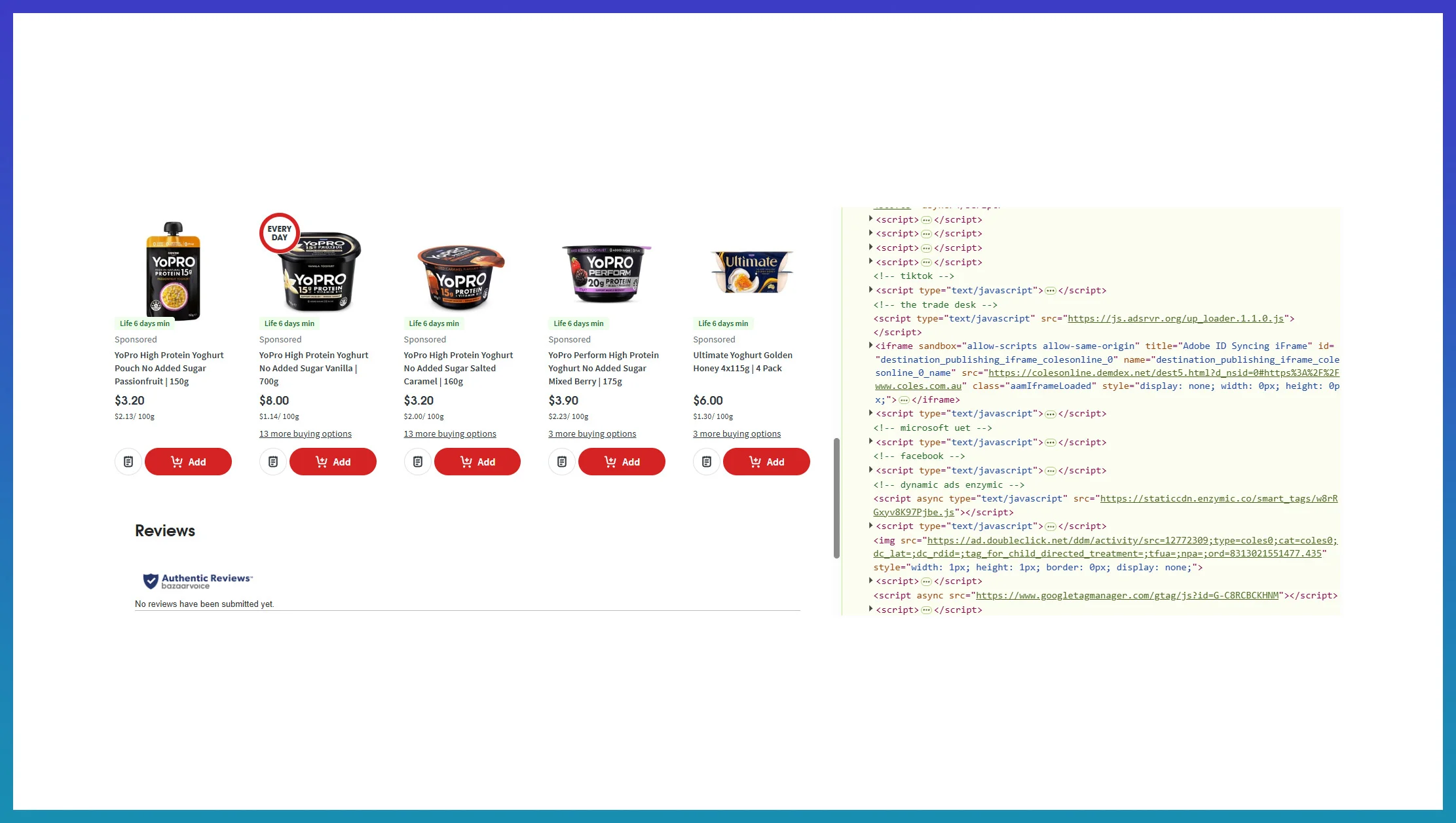
Dynamic market forces drive rapid pricing adjustments and complex promotional strategies across the modern online grocery landscape. Commercial retail teams require real-time visibility into weekly discount cycles, volume savings, and multi-buy special offers. Utilizing precise Coles Product Price Monitoring gives financial analysts accurate visibility into daily pricing fluctuations and promotional trends.
Data teams eliminate manual validation work while accumulating valuable historical pricing data to analyze competitor margins. High-frequency pricing shifts demand constant monitoring tools to ensure pricing strategy algorithms receive updated market metrics. Utilizing a robust Grocery Scraping API provides structured JSON data streams that feed directly into commercial intelligence dashboards and repricing tools.
Fast data delivery ensures retail software platforms react instantly to promotional launches and temporary price cuts. Continuous data feeds allow enterprise teams to protect gross margins while maintaining market competitiveness.
| Category | Average Weekly Price Edits | Tracking Accuracy |
|---|---|---|
| Fresh Produce | 1,250 | 99.8% |
| Packaged Goods | 3,400 | 99.9% |
| Dairy & Bakery | 850 | 99.7% |
- Captures weekly promotional shifts and multi-buy discount structures continuously across all major product categories.
- Feeds real-time pricing updates into enterprise repricing tools to maintain optimized competitive market positioning.
- Measures pricing elasticity and promotional depth across historical pricing trends to build predictive pricing models.
Capturing promotional details requires advanced extraction systems that isolate temporary price reductions from base retail pricing correctly. Standardized feeds distinguish regular retail prices, temporary promotional discounts, and loyalty program offers into separate database columns accurately. Financial analysts utilize these clean metrics to measure promotion duration, discount depth, and pricing elasticity.
How Web Fusion Data Can Help You?
Managing complex web scraping architectures internally creates significant engineering overhead and unexpected maintenance expenses. Choosing reliable Coles API Integration Services allows your organization to bypass technical hurdles like IP blocks, rendering issues, and broken schemas.
We deliver production-ready data pipelines customized specifically for enterprise grocery retrieval.
- Ingest high-volume retail listings with enterprise latency and guaranteed SLA uptime.
- Normalize raw supermarket catalog payloads into standardized JSON or database schemas.
- Bypass complex anti-bot mechanisms and geo-location constraints automatically.
- Receive custom alerts on major promotional cycles and pricing shifts instantly.
- Standardize product categories, barcodes, and localized unit pricing automatically.
- Reduce internal server infrastructure overhead while expanding ingestion scale.
Businesses seeking custom data solutions rely on our Scalable Web Scraping API Services to power continuous competitive analytics, automated repricing tools, and predictive demand modeling. Enterprise teams trust us to deliver reliable Coles Supermarket Data Extraction tailored to unique operational needs.
Conclusion
Automating large-scale data retrieval transforms how retail businesses evaluate competitive market positioning and shelf movements. Relying on optimized Coles API Integration Services removes technical hurdles, delivering clean data streams across thousands of daily listings effortlessly. Modern organizations build sustainable competitive advantages through structured, real-time insights into retail dynamics.
Maximizing operational efficiency requires robust pipelines capable of scaling across expanding product catalogs seamlessly. Implementing a reliable Coles Grocery Data API ensures consistent access to current market metrics without operational downtime or data corruption. Optimize your retail strategy today by partnering with Web Fusion Data to Collect Coles Product Prices and Availability Data effortlessly.