Introduction
Latin America's food delivery ecosystem has experienced unprecedented expansion, creating new opportunities for restaurants to reach customers through digital platforms. As competition intensifies, restaurant chains require sophisticated methods to track pricing dynamics, menu variations, and customer preferences across multiple markets. Through Food Data Scraping Services, businesses can systematically collect and analyze critical information that shapes their strategic positioning in this rapidly evolving landscape.
The ability to Extract Restaurant Menu Data From PedidosYa has become instrumental for restaurant operators seeking to understand regional taste preferences, seasonal demand patterns, and competitive pricing structures. By capturing structured datasets from one of Latin America's leading delivery platforms, businesses gain visibility into market movements that directly impact their revenue potential and customer retention rates.
Modern restaurant management demands more than traditional sales reporting—it requires comprehensive intelligence that connects menu performance with customer sentiment and competitor movements. Implementing Latin America Food Delivery Data Scraping methodologies enables organizations to build data repositories that support predictive analytics, menu optimization, and strategic expansion decisions.
The Client Story

A multi-location restaurant chain operating across several Latin American markets approached our team with concerns about their inability to monitor competitive dynamics effectively. Their existing systems captured internal sales metrics but provided no visibility into how their menu offerings, pricing strategies, and promotional activities compared to competing establishments within the same delivery corridors. This information gap was preventing them from making timely adjustments that could protect market share and improve profitability.
The organization specifically needed capabilities to Extract Restaurant Menu Data From PedidosYa in a manner that would support both tactical and strategic decision-making. Their management team wanted to identify which menu items were gaining traction among competitors, how pricing fluctuated during peak demand periods, and what promotional strategies were being deployed across different geographical zones.
Beyond competitive intelligence, the client sought to establish a framework for continuous monitoring that would alert them to emerging trends before these patterns became widely adopted. They recognized that Restaurant Performance Analytics Data could transform their planning processes, enabling them to test menu innovations, adjust portion sizes, and refine delivery fees based on empirical evidence rather than assumptions.
The Challenges
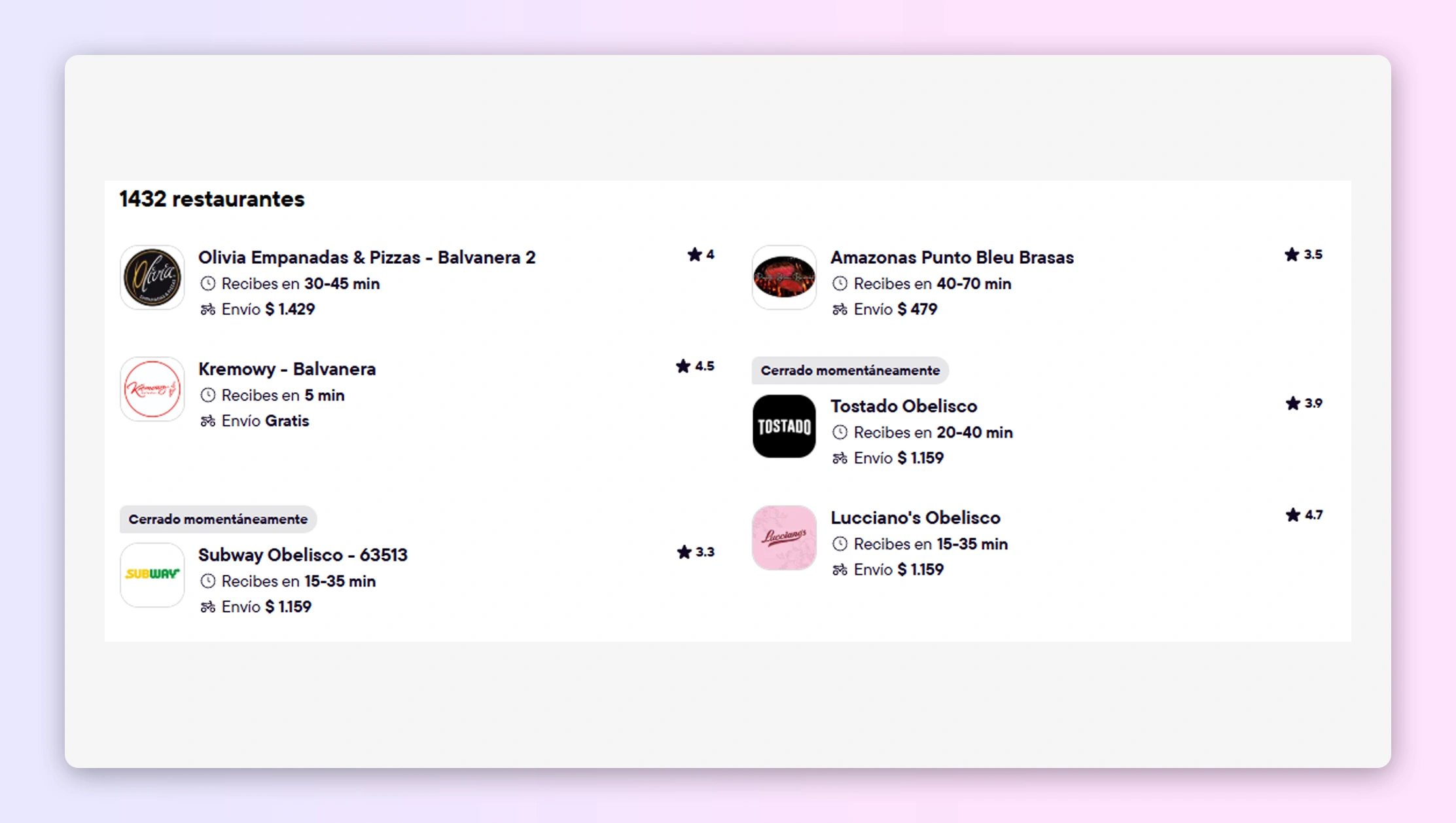
Prior to engaging with our solution, the client's teams were attempting to gather competitive information through manual methods that proved both time-consuming and unreliable. Restaurant managers would periodically review competitor listings, but this approach yielded fragmented snapshots rather than comprehensive trend analysis.
Their greatest frustration centered on the absence of Ratings and Reviews Analysis capabilities that could connect customer sentiment with specific menu items or service attributes. While they could see overall ratings, they had no efficient method to identify recurring complaints about delivery times, food quality issues, or pricing concerns.
Primary operational challenges included:
- Inconsistent competitive monitoring across multiple markets and time zones
- Inability to correlate menu changes with resulting order volume fluctuations
- Limited understanding of how promotional strategies impacted customer acquisition costs
- Absence of automated systems to track emerging food trends and ingredient preferences
- Difficulty maintaining current information on competitor delivery fees and service policies
- No centralized platform to compare performance metrics across their own location network
These obstacles created a reactive operational culture where decisions were made based on incomplete information. The client's marketing and operations teams often worked with outdated assumptions about customer preferences, leading to menu investments that failed to generate expected returns.
The Solutions
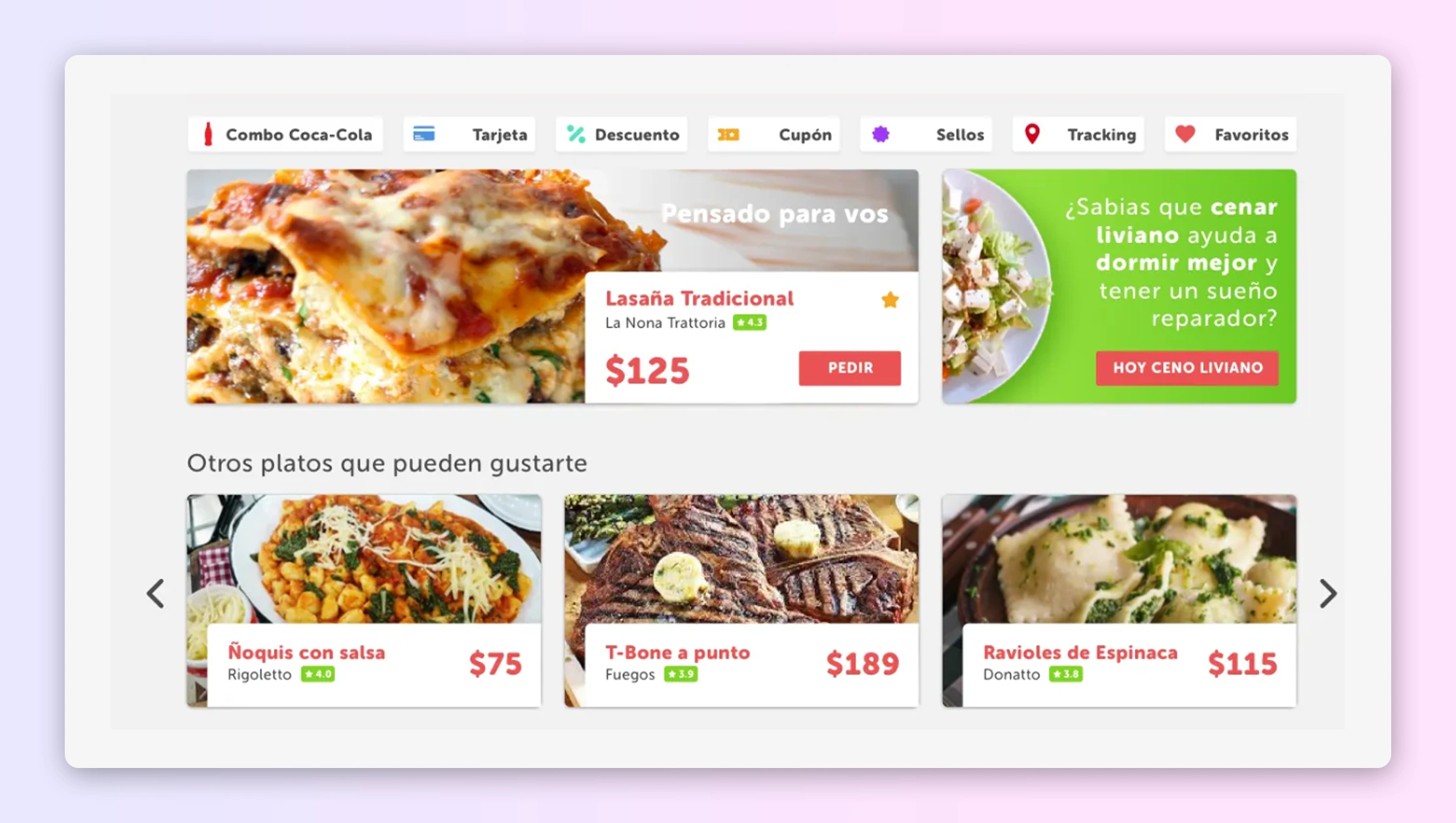
Addressing the client's requirements demanded a comprehensive approach that combined automated data collection with intelligent analysis capabilities. Our team developed a customized infrastructure designed to Extract Restaurant Menu Data From PedidosYa continuously, ensuring the client maintained current information on thousands of menu items across their competitive landscape.
This system was engineered to handle regional variations in language, currency, and menu categorization while maintaining data consistency.
The implementation strategy incorporated:
- Automated monitoring systems that tracked menu updates, pricing adjustments, and promotional campaigns in real-time across target markets
- Development of a PedidosYa Competitor Analysis API integration that enabled seamless data flow into the client's existing business intelligence platforms
- Creation of customized dashboards presenting comparative metrics on menu diversity, price positioning, and delivery performance
- Establishment of alert mechanisms to notify management teams when competitors introduced significant menu changes or pricing strategies
- Implementation of Real-Time Restaurant Data Feed capabilities that supported immediate tactical responses to competitive movements
- Design of historical trend analysis tools that identified seasonal patterns and emerging customer preferences
This framework transformed raw platform data into actionable intelligence that directly supported revenue optimization and strategic planning. The PedidosYa Food Delivery Price Monitoring Solution component specifically enabled dynamic pricing strategies that responded to competitive pressure while maintaining profitability targets. By automating previously manual processes, the client's teams could redirect their efforts toward strategic innovation rather than routine data collection.
Benefits of Choosing Web Fusion Data
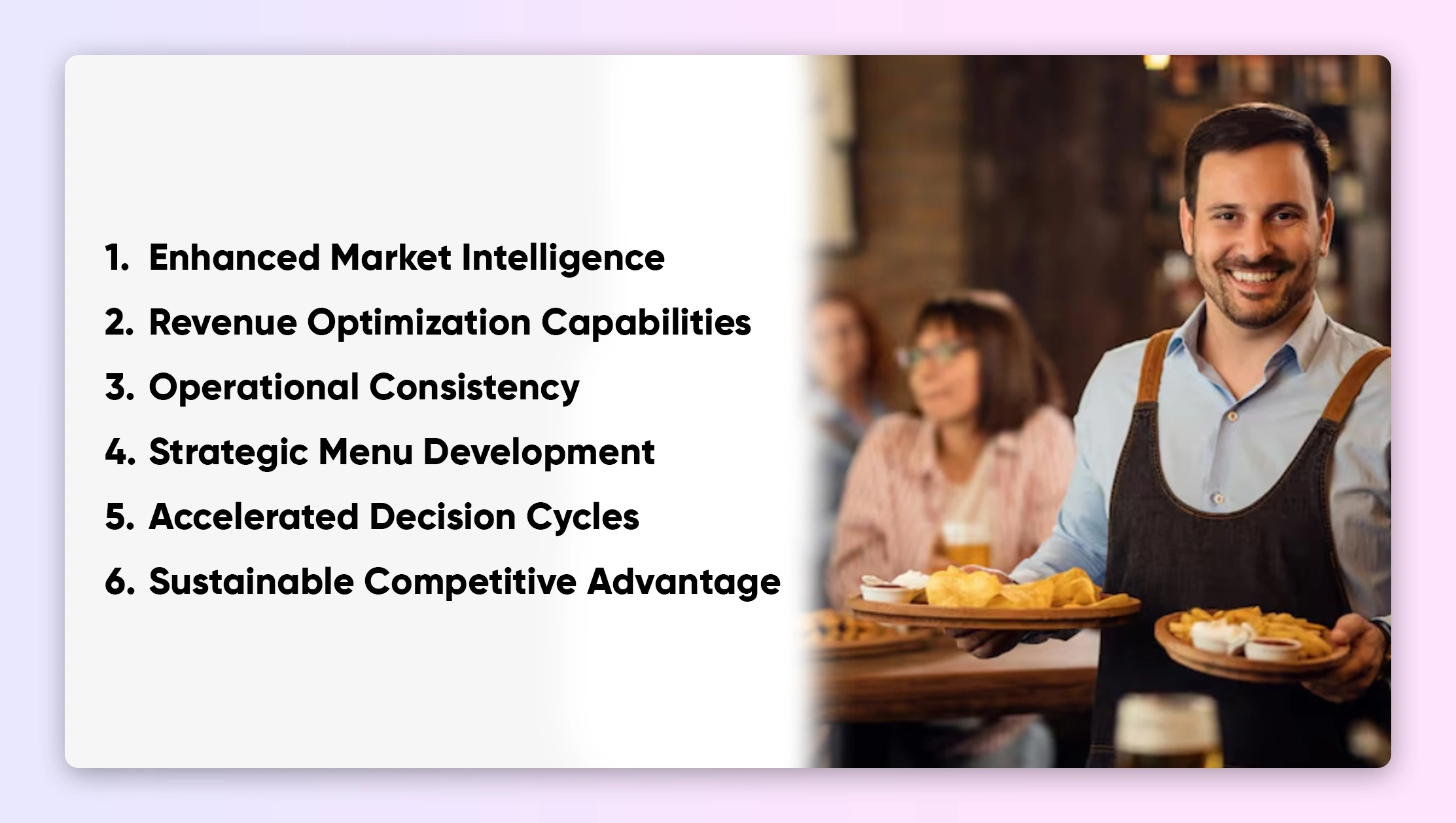
Implementing structured data capabilities generates measurable improvements across multiple business dimensions. The following advantages illustrate how systematic intelligence gathering enhances competitive positioning, operational efficiency, and strategic agility in rapidly changing markets.
-
Enhanced Market Intelligence
The deployment of Latin America Food Delivery Data Scraping methodologies provided the client with unprecedented visibility into competitive strategies, menu innovations, and pricing trends. This intelligence enabled proactive market positioning rather than reactive adjustments.
-
Revenue Optimization Capabilities
Access to comprehensive pricing data through the PedidosYa Food Delivery Price Monitoring Solution allowed the client to implement dynamic pricing models that maximized revenue during peak demand while remaining competitive during slower periods.
-
Operational Consistency
Standardized data collection across all markets ensured that regional teams worked from identical information sets, eliminating discrepancies and supporting coordinated strategic initiatives across the organization.
-
Strategic Menu Development
Understanding customer preferences and competitor offerings enabled evidence-based menu development that reduced innovation risk and increased the success rate of new product launches across different markets.
-
Accelerated Decision Cycles
Real-Time Restaurant Data Feed capabilities eliminated the lag time between market changes and organizational responses, allowing the client to capitalize on opportunities and mitigate threats with unprecedented speed.
-
Sustainable Competitive Advantage
Continuous monitoring and analysis created an information advantage that competitors could not easily replicate, establishing the client as a market leader in strategic responsiveness and customer-centric innovation.
Performance Metrics and Outcomes
| Analysis Category | Strategic Focus | Implementation Method | Measurable Impact |
|---|---|---|---|
| Pricing Optimization | Revenue maximization | Dynamic adjustment protocols | 18% margin improvement |
| Menu Engineering | Customer preference alignment | Data-driven item selection | 31% order frequency increase |
| Market Positioning | Competitive differentiation | Benchmark comparison analysis | 24% market share growth |
| Service Enhancement | Delivery efficiency improvement | Performance gap identification | 42% faster fulfillment times |
| Demand Forecasting | Inventory optimization | Historical pattern analysis | 37% reduction in waste |
This performance framework demonstrates how systematic data extraction translates into tangible business outcomes. The Restaurant Performance Analytics Data derived from continuous monitoring enabled the client to identify optimization opportunities that had previously remained hidden within unstructured information sources.
These metrics reflect the compounding effect of making informed decisions across multiple business functions simultaneously. When menu development, pricing strategies, and operational planning all operate from the same intelligence foundation, organizations achieve synergistic improvements that exceed the sum of individual optimizations.
The integration of PedidosYa Competitor Analysis API capabilities further accelerated the client's ability to respond to market dynamics, creating a feedback loop where insights informed actions, and actions generated new data for continuous refinement.
Client Testimonials
Implementing this data-driven approach has fundamentally changed how we compete in Latin America's food delivery markets. The ability to Extract Restaurant Menu Data From PedidosYa gave our teams the visibility they needed to make confident decisions about menu positioning and pricing strategies. The Restaurant Performance Analytics Data we receive has become essential to our weekly planning sessions and quarterly strategy reviews.
– Director of Strategic Operations, Multi-Market Restaurant Group
Conclusion
This initiative proved that systematic data collection and analysis can redefine competitive dynamics in the food delivery sector. By establishing infrastructure to Extract Restaurant Menu Data From PedidosYa, the client gained capabilities that extended far beyond simple competitive monitoring.
The application of Latin America Food Delivery Data Scraping methodologies created a sustainable competitive advantage rooted in superior market intelligence. As the food delivery landscape continues to evolve, organizations with robust data capabilities will consistently outperform those relying on traditional information sources and intuition-based planning.
This case demonstrates that investing in systematic intelligence gathering delivers returns across every dimension of restaurant operations. Contact Web Fusion Data today to discover how our specialized data extraction solutions can transform your competitive positioning in the food delivery marketplace.