Introduction
Hotel prices can change several times a day depending on demand, booking windows, room availability, seasonal trends, and competitor activity. Travelers compare properties across Expedia, Booking.com, and Trivago before making reservations, creating a competitive environment for hotel businesses. Comparing rates across these platforms helps revenue teams understand how their properties are positioned in the market.
These comparisons help teams understand why seemingly similar rooms may display different prices across booking channels. OTA Price Intelligence enables hotels to evaluate room prices, compare similar properties, and identify differences across online travel platforms. By collecting publicly available pricing information, businesses can examine room categories, occupancy conditions, cancellation policies, and promotional offers.
A structured comparison process also supports better pricing decisions and revenue planning. Hotels can identify pricing gaps, review competitor movements, and adjust their strategies according to market conditions. With reliable platform-level data, revenue managers can make informed decisions about room rates, promotions, and distribution channels while maintaining competitive positioning and protecting profitability.
Comparing Hotel Room Rates Across Leading Booking Platforms
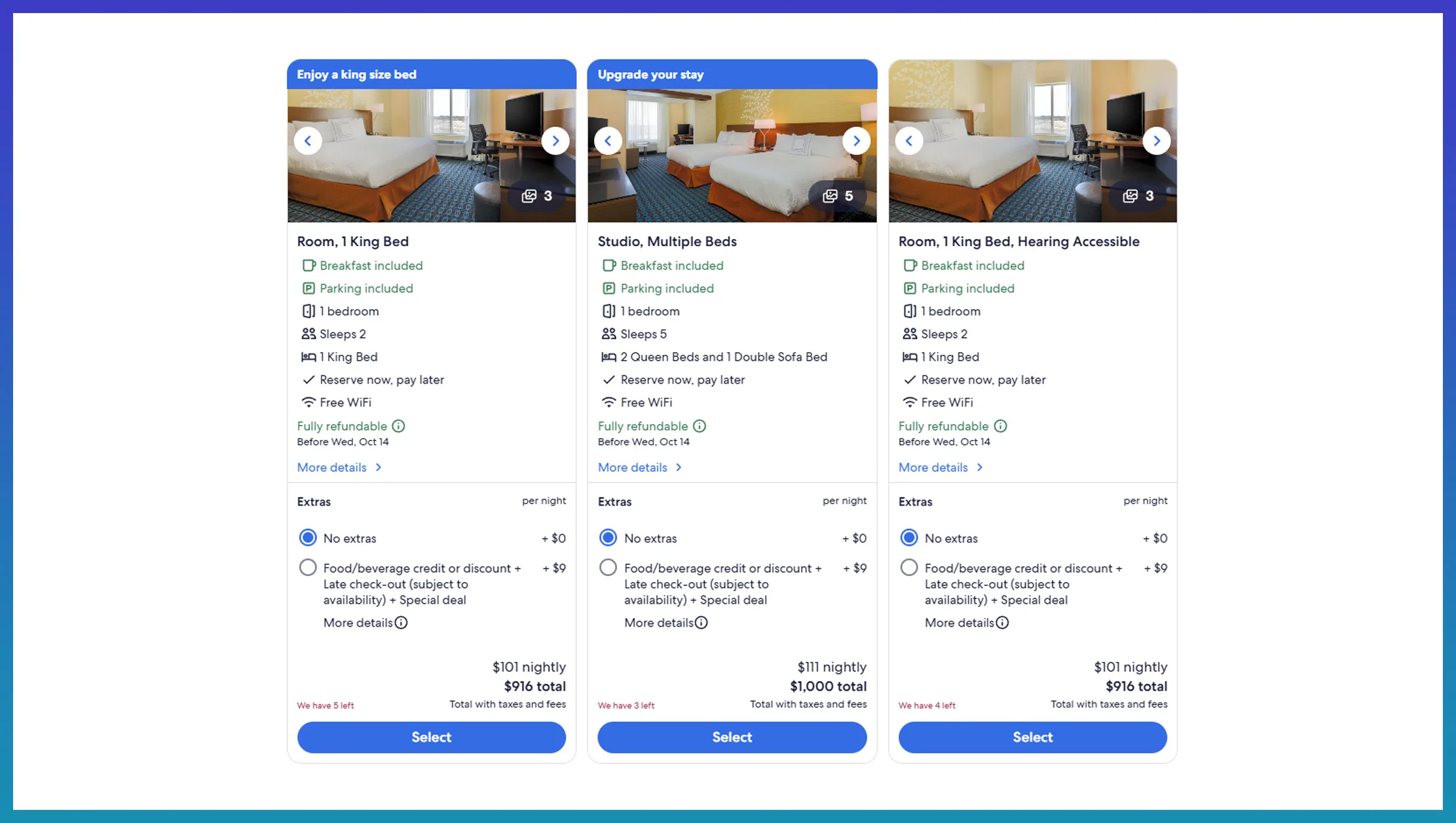
Hotel rate comparisons help businesses understand how room prices vary across online travel agencies and metasearch platforms. An accurate comparison requires matching equivalent properties, room categories, occupancy levels, and travel dates rather than simply comparing the lowest displayed prices. Using Hotel Price Data Scraping allows businesses to collect publicly available information systematically and organize it into comparable records for further evaluation.
Hotels can combine information from multiple sources to examine pricing differences and understand how individual distribution channels present their offers. For instance, Expedia Hotel Price Data can support an evaluation of listed room rates, availability, and booking conditions. When the same property displays different prices across platforms, revenue managers can investigate whether the difference reflects a genuine pricing gap, a special promotion, or variations in the included services.
Regular monitoring also helps businesses identify recurring patterns instead of relying on isolated observations. OTA Hotel Price Monitoring provides a framework for reviewing rates across selected properties and travel dates, allowing teams to compare current listings with historical records. Hotels can then investigate unusual price changes and evaluate whether adjustments to their own offers are commercially appropriate.
| Comparison Factor | Information Collected | Business Application |
|---|---|---|
| Room prices | Displayed rates for equivalent rooms | Evaluate price differences |
| Availability | Listed room availability | Understand market supply |
| Cancellation terms | Refundable and non-refundable conditions | Compare equivalent offers |
| Taxes and fees | Additional charges displayed | Assess total booking costs |
Key practices for better comparisons:
- Match properties using location, amenities, and room categories.
- Compare identical travel dates and occupancy requirements.
- Record collection timestamps for accurate historical analysis.
- Validate prices before including them in reports.
A structured comparison process should prioritize consistency, data validation, and relevant market benchmarks. Businesses can improve the usefulness of their analysis by documenting collection times, currency differences, taxes, room conditions, and cancellation terms. These practices help revenue teams distinguish meaningful price variations from differences caused by booking conditions or incomplete listings.
Evaluating Competitor Rate Changes to Improve Revenue Decisions
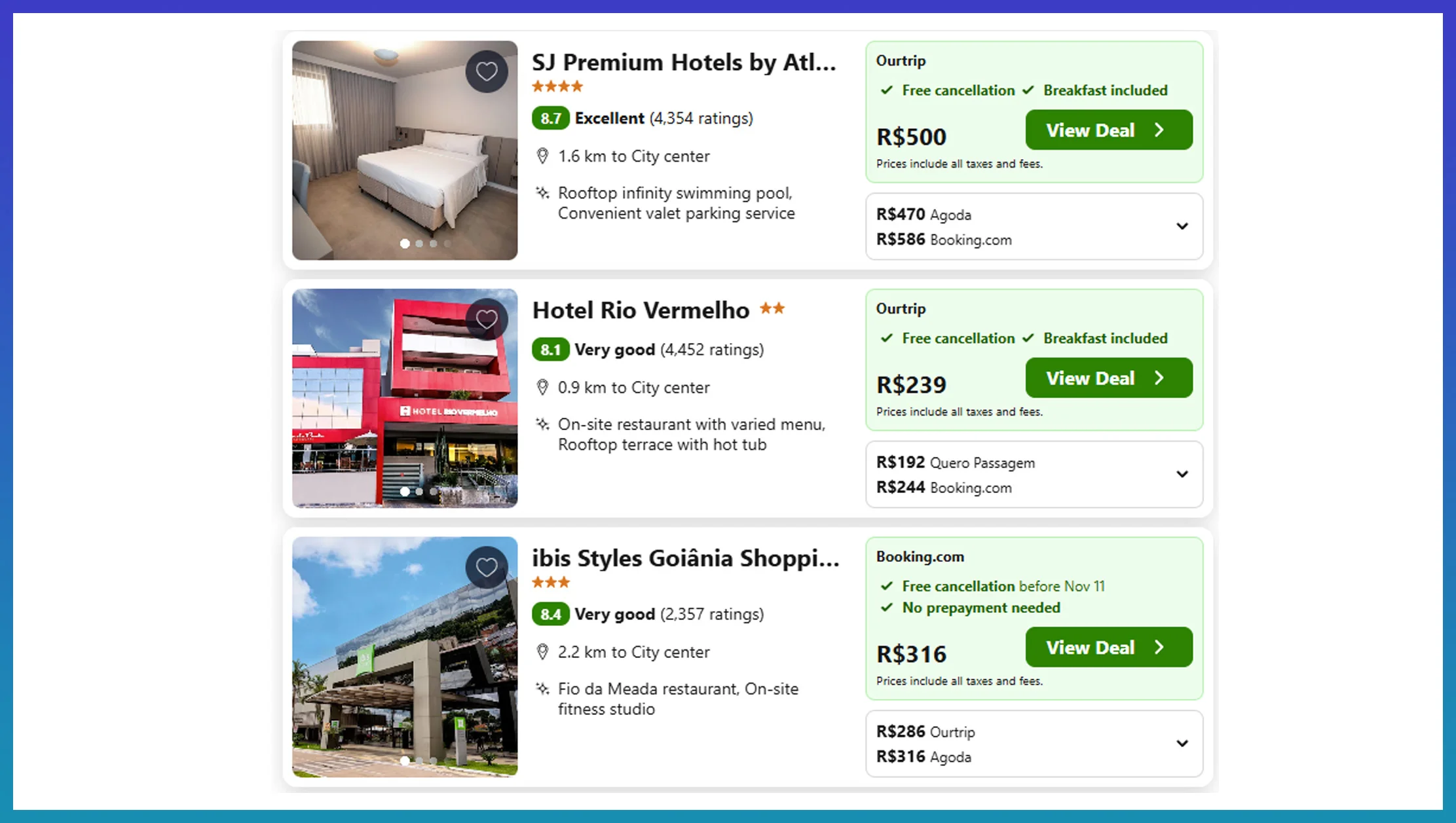
Competitor pricing analysis helps hotels understand their relative market position and identify opportunities to refine room rates. Prices may increase during local events, fall during low-demand periods, or change when competitors introduce promotional campaigns. A structured review of these movements allows revenue managers to assess the wider market before changing their own prices. Hotel Rate Intelligence Across OTAs supports this process by organizing rate observations from multiple booking channels into a consistent analytical framework.
Comparing hotel listings across metasearch platforms also helps teams understand how travelers encounter different offers during their booking journey. For example, Trivago Hotel Rate Comparison can help businesses evaluate displayed prices for comparable accommodation options. However, a lower advertised price does not automatically represent a better offer because room conditions, taxes, cancellation flexibility, and included services may differ between listings.
Historical records make competitor analysis more useful by showing whether price changes are temporary or recurring. Hotel Competitor Price Tracking can help revenue teams review daily movements, identify repeated discounting patterns, and compare pricing behavior across selected properties. These observations can inform decisions about promotional timing, seasonal rates, and the positioning of different room categories.
| Pricing Indicator | Illustrative Observation | Possible Response |
|---|---|---|
| Competitor rate increase | Rates rise by 8% | Review demand and positioning |
| Weekend price difference | Your rate is $20 lower | Assess pricing opportunities |
| Promotional activity | A competitor offers 15% off | Evaluate campaign effectiveness |
| Repeated rate reductions | Prices decline over several days | Review local demand patterns |
Practical steps for competitor analysis:
- Track a consistent group of comparable properties.
- Separate promotional rates from standard room prices.
- Compare weekday, weekend, and event-period movements.
- Evaluate findings alongside occupancy and booking pace.
Hotels should avoid changing prices solely because a competitor has lowered its rate. Pricing decisions also depend on occupancy, booking pace, operating expenses, customer segments, and expected demand. Combining competitor observations with internal performance data gives revenue managers a stronger basis for determining when to maintain prices, introduce discounts, or adjust room availability.
Using Cross-Platform Pricing Records to Refine Hotel Strategies

A unified view of hotel pricing helps businesses understand how room rates vary across locations, booking channels, and travel periods. Comparing records from multiple sources can reveal differences in promotional activity, seasonal pricing, and competitor positioning. Hotel Price Intelligence for Travel Businesses supports this process by helping organizations structure market information for research, benchmarking, and commercial planning.
Cross-platform analysis becomes more useful when pricing information is organized according to consistent attributes. Businesses can compare similar room categories, group properties by location, and examine changes across defined periods. Online Travel Agency Price Comparison Data can help analysts evaluate whether observed differences are associated with booking conditions, platform-specific offers, or broader market movements. Standardized records also make it easier to prepare recurring reports and dashboards.
Historical pricing records can help hotel teams evaluate the effects of seasonal demand and competitor behavior. For example, comparing rates before, during, and after a major local event may show how accommodation prices respond to changing demand. Analysts can use these patterns to inform future pricing plans, provided that they consider other factors such as occupancy, booking lead times, and room availability.
| Data Category | Analytical Purpose | Potential Application |
|---|---|---|
| Daily room rates | Compare market positioning | Review base prices |
| Seasonal pricing | Identify recurring patterns | Plan seasonal adjustments |
| Promotional offers | Examine discount activity | Refine campaign timing |
| Property attributes | Group comparable hotels | Improve benchmarking |
Ways to improve pricing analysis:
- Segment properties by location and accommodation type.
- Maintain consistent collection schedules and comparison periods.
- Validate currencies, taxes, and room conditions.
- Combine external pricing records with internal performance metrics.
A reliable pricing strategy requires more than collecting large volumes of information. Businesses should verify property matches, remove duplicate records, standardize currencies, and account for differences in taxes and cancellation policies. These quality controls make comparisons more meaningful and reduce the risk of basing commercial decisions on inconsistent information.
How Web Fusion Data Can Help You?
Managing hotel prices across multiple booking platforms requires consistent data collection, accurate property matching, and regular monitoring. We can support travel-market research by helping businesses organize publicly available pricing information from relevant online sources.
With OTA Price Intelligence, businesses can evaluate hotel rate differences across selected booking channels and examine pricing patterns over time. Organized records can help revenue teams identify potential discrepancies, review promotional activity, and understand how comparable properties position their room rates.
We can support your hotel pricing research through the following activities:
- Collect publicly accessible hotel pricing information from relevant travel platforms.
- Compare room rates across competing properties and booking channels.
- Organize pricing records by location, room category, and collection date.
- Monitor available promotional offers and displayed booking conditions.
- Prepare structured datasets for reporting, visualization, and historical analysis.
- Support recurring data collection for ongoing competitor benchmarking.
These activities can reduce repetitive manual research and help businesses establish a more consistent pricing analysis workflow. With structured Hotel Datasets, revenue teams can review historical patterns, compare market positioning, and support commercial decisions with relevant evidence.
Conclusion
Comparing hotel prices across Expedia, Booking.com, and Trivago helps businesses understand competitive positioning and changing market conditions. OTA Price Intelligence supports structured rate comparisons, promotional analysis, and revenue planning, while Hotel Price Intelligence for Travel Businesses helps teams evaluate pricing patterns and make informed commercial decisions.
Turn fragmented travel-platform information into a structured pricing resource with us. Our Travel & OTA Data Scraping Services can support your requirements for hotel rate comparisons, competitor monitoring, and market research. Contact Web Fusion Data today to discuss your hotel pricing data requirements and build a solution tailored to your business goals.