Introduction
The evolving e-commerce landscape demands accurate, real-time data to maintain profitability and strengthen brand positioning. Online grocery retailers frequently update their product catalogs, pricing, and promotional offers to respond to changing market conditions. Integrating the Ocado API enables businesses to collect structured retail data, identify promotional opportunities, monitor inventory fluctuations, and optimize product listings across competitive online grocery markets.
Automated data extraction transforms how retail teams perform store audits and competitor benchmarking. Modern e-commerce platforms maintain thousands of rapidly shifting SKUs that require continuous monitoring. Relying on manually collected digital details leads to inaccurate pricing models, missed promotional trends, and delayed strategic decision-making in competitive digital storefronts.
Executing automated Ocado Price Monitoring provides clear visibility into dynamic grocery markets. Extracting precise product attributes helps analysts uncover hidden pricing strategies across various regional markets. This systematic approach ensures retail brands optimize their positioning while gathering accurate actionable insights to power long-term digital growth strategies.
Strategic Methods For Extracting Competitor Pricing Models From Online Platforms
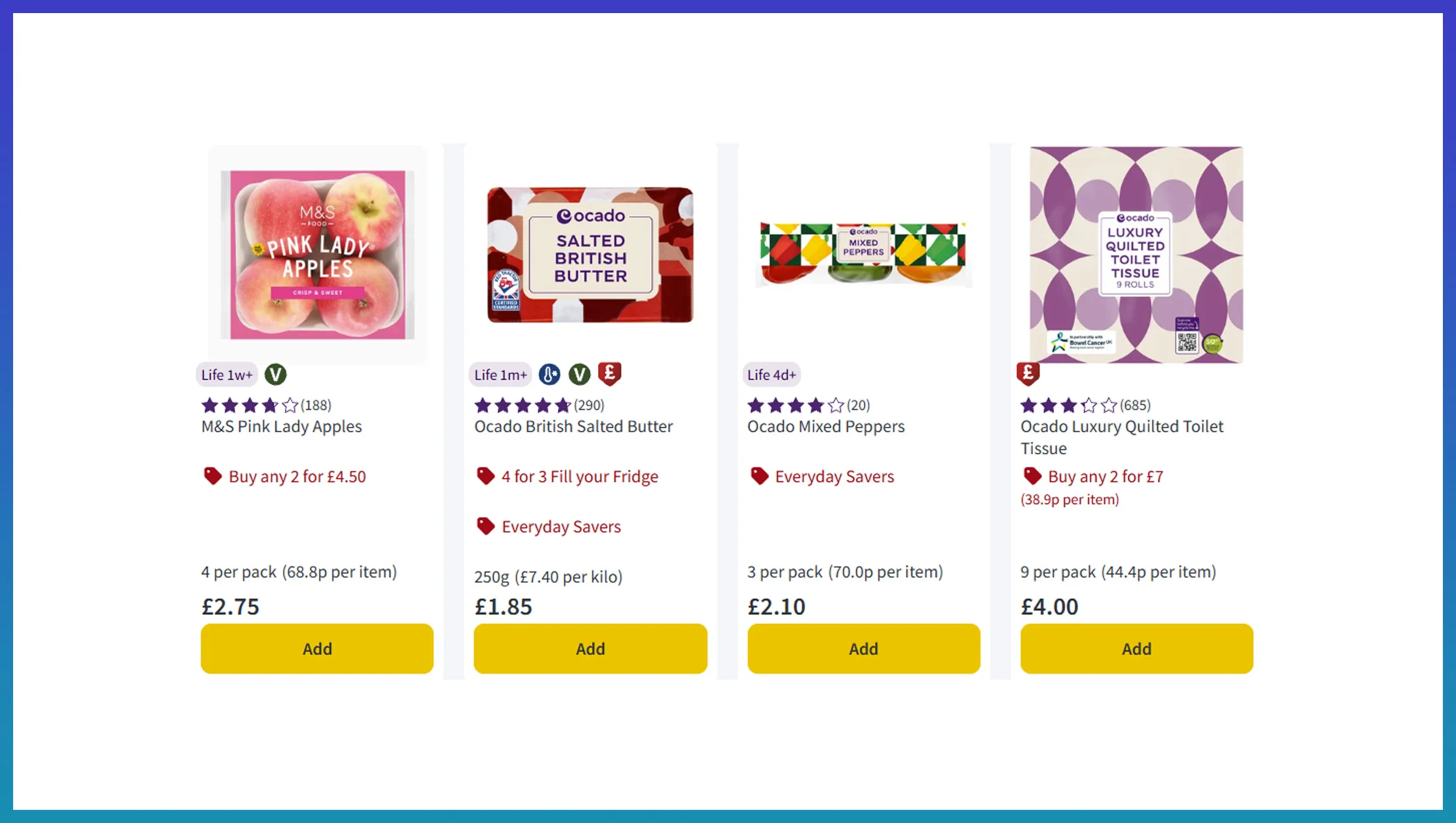
Digital storefronts dynamically adjust item rates according to regional market movements, shifts in local consumer demand, and underlying operational expenses. Monitoring these continuous changes manually consumes significant resources and frequently introduces human calculation errors into executive reporting dashboards.
Implementing an Ocado Price Tracking API empowers research teams to capture item-level pricing metrics automatically across extensive product categories. Automated pipelines retrieve base prices, volume discounts, and temporary promotional markdowns without regional bias, ensuring complete accuracy across all benchmarking audits.
Evaluating price metrics using an Ocado API for Supermarket Price Monitoring gives commercial strategists the exact clarity needed to refine internal margin structures. Organizations can easily discover hidden pricing trends, cross-evaluate competing product lines, and react immediately to aggressive discounting tactics launched by market competitors.
- Automated tracking eliminates manual calculation errors during comparative market audits.
- Continuous monitoring captures regional pricing variations across localized distribution centers.
- Historical rate tracking simplifies the identification of long-term promotional campaign patterns.
- Clean data outputs integrate directly into automated dynamic pricing management software.
Modern e-commerce analytics demonstrate that automated data ingestion accelerates market response times significantly across complex retail environments. Companies utilizing continuous feeds adjust commercial offerings up to four times faster than competitors relying on legacy manual tracking techniques.
| Metrics Tracked | Manual Extraction | Automated Extraction |
|---|---|---|
| Data Refresh Rate | 24 - 48 Hours | Real-Time / Hourly |
| Data Accuracy Rate | 82% | 99.5% |
| Coverage Capacity | Up to 500 SKUs | 100,000+ SKUs |
Streamlining Inventory Tracking Mechanisms To Understand Regional Fulfillment Performance
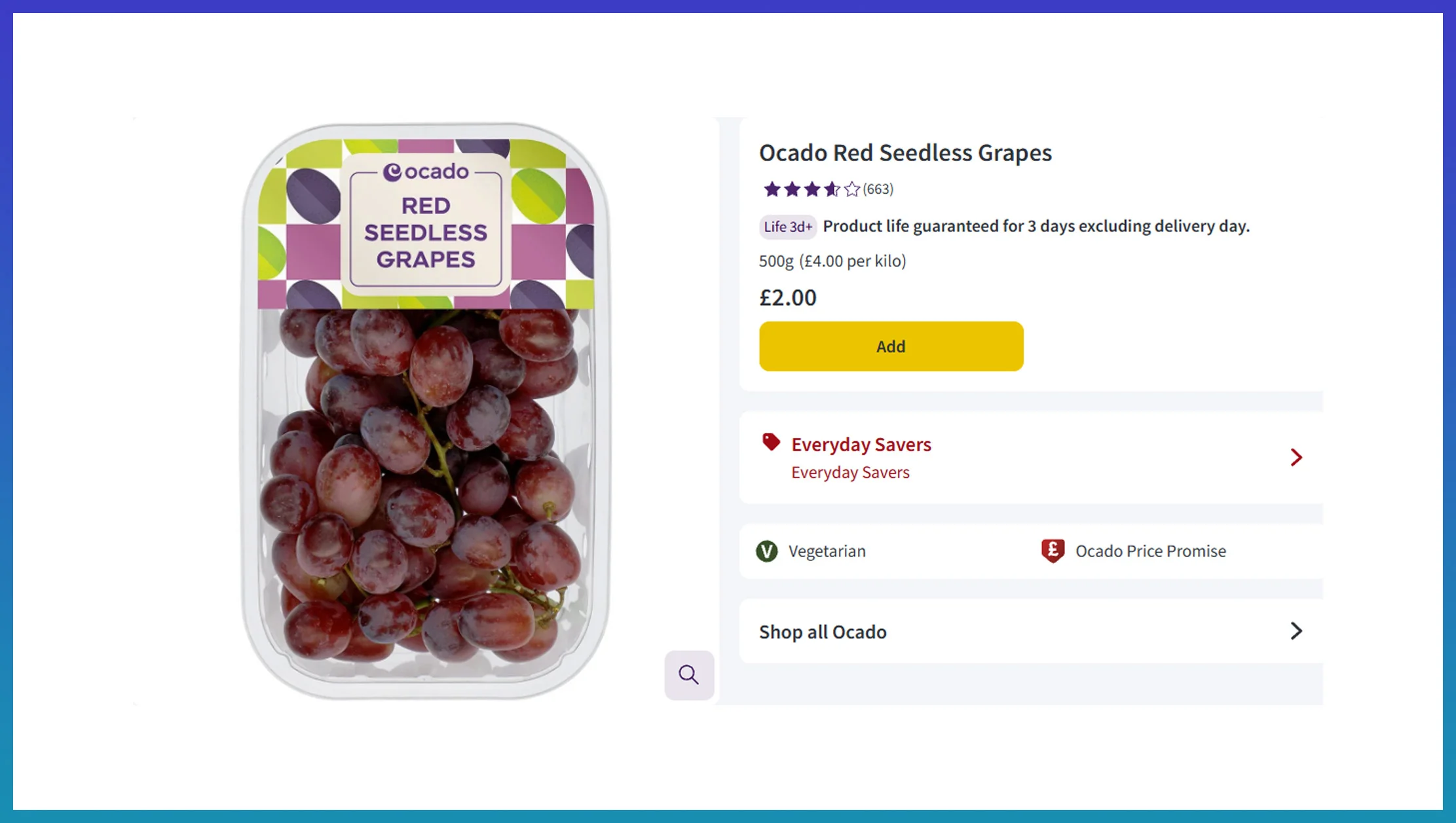
Out-of-stock occurrences directly affect brand reliance and diminish digital sales performance across online consumer platforms. Gaining comprehensive visibility into competitor stock levels enables commercial directors to make informed supply chain adjustments and capitalize on unexpected inventory voids.
Deploying a dedicated Ocado Product Availability API provides automated tracking of SKU fulfillment status across diverse regional fulfillment hubs. Analytics teams can easily measure stock depletion speed, restock cycles, and local item shortages to anticipate supply chain disruptions before they impact revenue.
Accessing reliable Ocado Inventory Data allows enterprise teams to map localized fulfillment patterns with precise operational clarity. Identifying regional warehouse deficits enables brands to adjust localized promotional campaigns, capture displaced market share, and optimize product distribution schedules accordingly.
- Real-time availability monitoring identifies temporary supply chain gaps across rival brands.
- Regional stock audits reveal localized consumer demand surges and fulfillment capacities.
- Inventory velocity metrics help predict restocking intervals and product turnover rates.
- Automated stock alerts prevent missed revenue opportunities during peak shopping seasons.
Commercial research confirms that grocers systematically monitoring rival inventory trends capture substantially higher sales volumes during supply disruptions. Real-time availability insights allow growth managers to reallocate marketing budgets instantly whenever competing platforms encounter stock shortages.
| Inventory Metric | Impact on Retail Analysis | Data Precision Improvement |
|---|---|---|
| Stockout Duration | Identifies competitor supply gaps | +45% Market Capture |
| Regional Fulfillment | Maps geographical demand shifts | +38% Logistics Efficiency |
| Restock Velocity | Evaluates supplier response speeds | +50% Forecasting Accuracy |
Transforming Complex Digital Shelf Attributes Into Actionable Commercial Intelligence
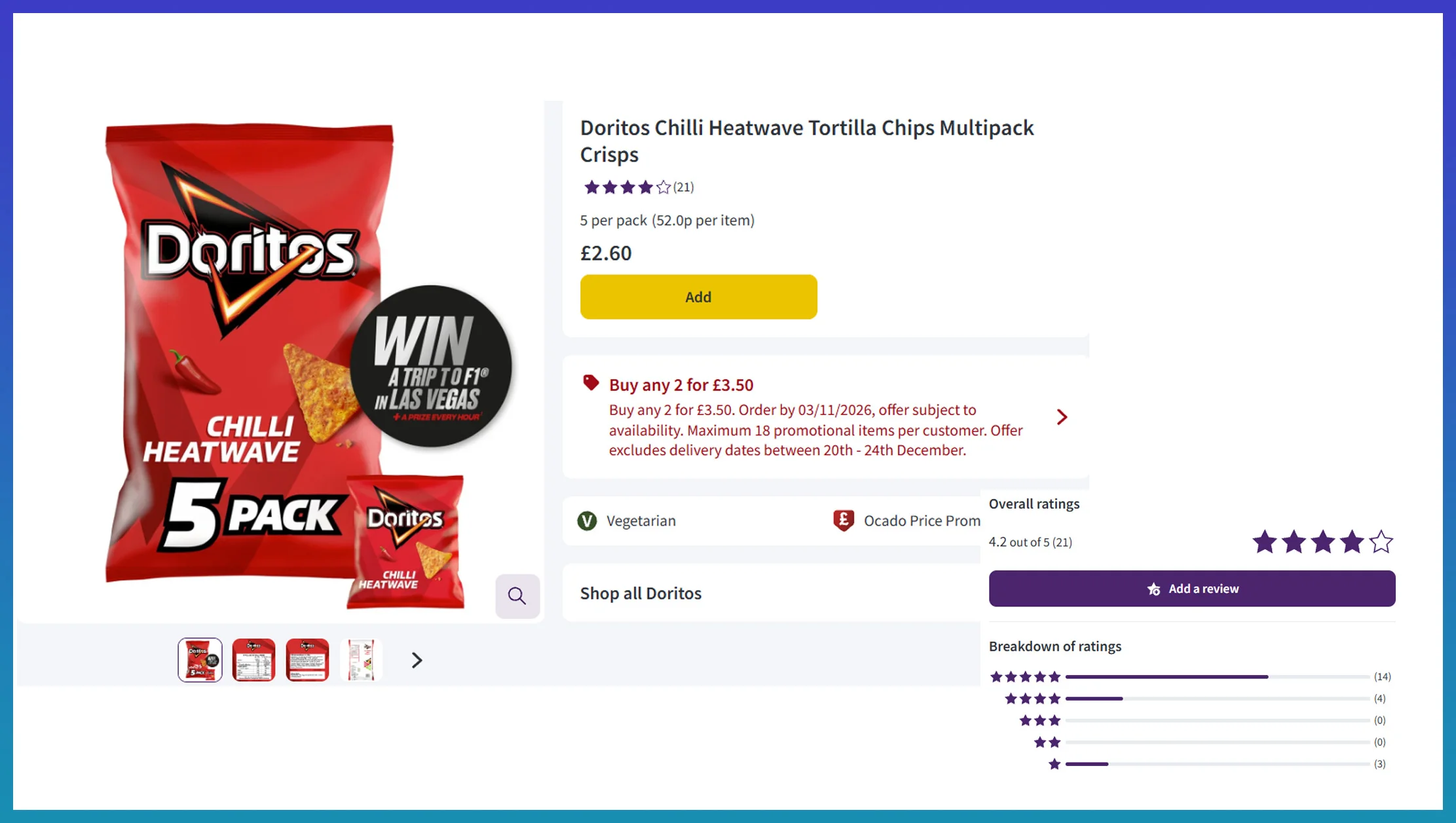
Comprehensive product analysis extends beyond basic price points and stock availability counts. Complete digital shelf intelligence requires parsing nutritional details, ingredient specifications, package sizes, brand positioning, and category placement across dynamic e-commerce platforms to accurately assess total market dominance.
Integrating Grocery Pricing Intelligence solutions enables intelligence teams to convert unstructured web attributes into structured executive dashboards. This systematic processing uncovers broader discount architectures, product placement strategies, and shifting buyer preferences across various digital sales channels.
Leveraging specialized Ocado API for Grocery Retail Analytics applications allows market researchers to evaluate brand visibility and shelf placement tactics. Detailed attribute parsing assists commercial teams in discovering emerging consumer trends, evaluating promotional effectiveness, and identifying underrepresented product categories.
- Comprehensive attribute extraction captures complete product details and promotional labels.
- Shelf placement analysis measures brand visibility and competitive category share.
- Multi-buy discount tracking clarifies true consumer costs and bundle promotional effectiveness.
- Automated catalog mapping simplifies competitive benchmarking across vast item inventories.
Industry metrics indicate that consumer brands utilizing structured e-commerce intelligence achieve measurable improvements in profit margins. Data-backed decision-making empowers commercial managers to negotiate superior supplier contracts, refine packaging strategies, and execute high-precision marketing campaigns.
| Analytical Dimension | Strategic Application | Expected Business Result |
|---|---|---|
| Category Share Analysis | Benchmarks shelf-space allocation | Optimized SKU Placement |
| Promotional Tracking | Measures multi-buy discount impact | Improved ROI on Campaigns |
| Attribute Parsing | Tracks organic and dietary trends | Targeted Product Innovation |
How Web Fusion Data Can Help You?
Modern enterprise businesses require scalable infrastructure to process large-scale e-commerce datasets reliably. Our technical solutions integrate the Ocado API directly into your existing data architecture, ensuring seamless data flow without operational downtime.
We remove web extraction complexities, IP blockages, and dynamic rendering obstacles so your team receives clean, ready-to-analyze product feeds continuously.
- Seamless integration with custom data pipelines and cloud storage solutions
- High-frequency data extraction tailored to enterprise monitoring schedules
- Enterprise-grade proxy management guaranteeing high extraction success rates
- Advanced data cleaning and normalization for immediate analytical use
- Comprehensive catalog coverage across pricing, stock, and product attributes
- Dedicated technical support offering customized web extraction workflows
Deploying a custom Grocery Scraping API enables enterprise teams to obtain structured datasets without maintaining expensive internal extraction pipelines. Our dedicated custom solutions leverage the Ocado Grocery API to deliver accurate, reliable feeds that accelerate strategic market growth.
Conclusion
Modern retail strategy depends heavily on accurate, real-time market insights. Implementing the Ocado API enables online businesses to automate product monitoring, streamline pricing strategy, and improve overall supply chain visibility. Accessing reliable, clean product data equips enterprise organizations with the essential tools required to make confident, data-driven decisions that consistently strengthen market position.
Evaluating dynamic market shifts becomes seamless when backed by automated extraction frameworks. Leveraging a Supermarket Data API ensures your enterprise maintains complete visibility across competitive product catalogs, stock availability, and promotional structures. Partnering Web Fusion Data to simplify complex web scraping infrastructure, empowering your business to focus entirely on actionable insights and sustainable revenue growth.