Introduction
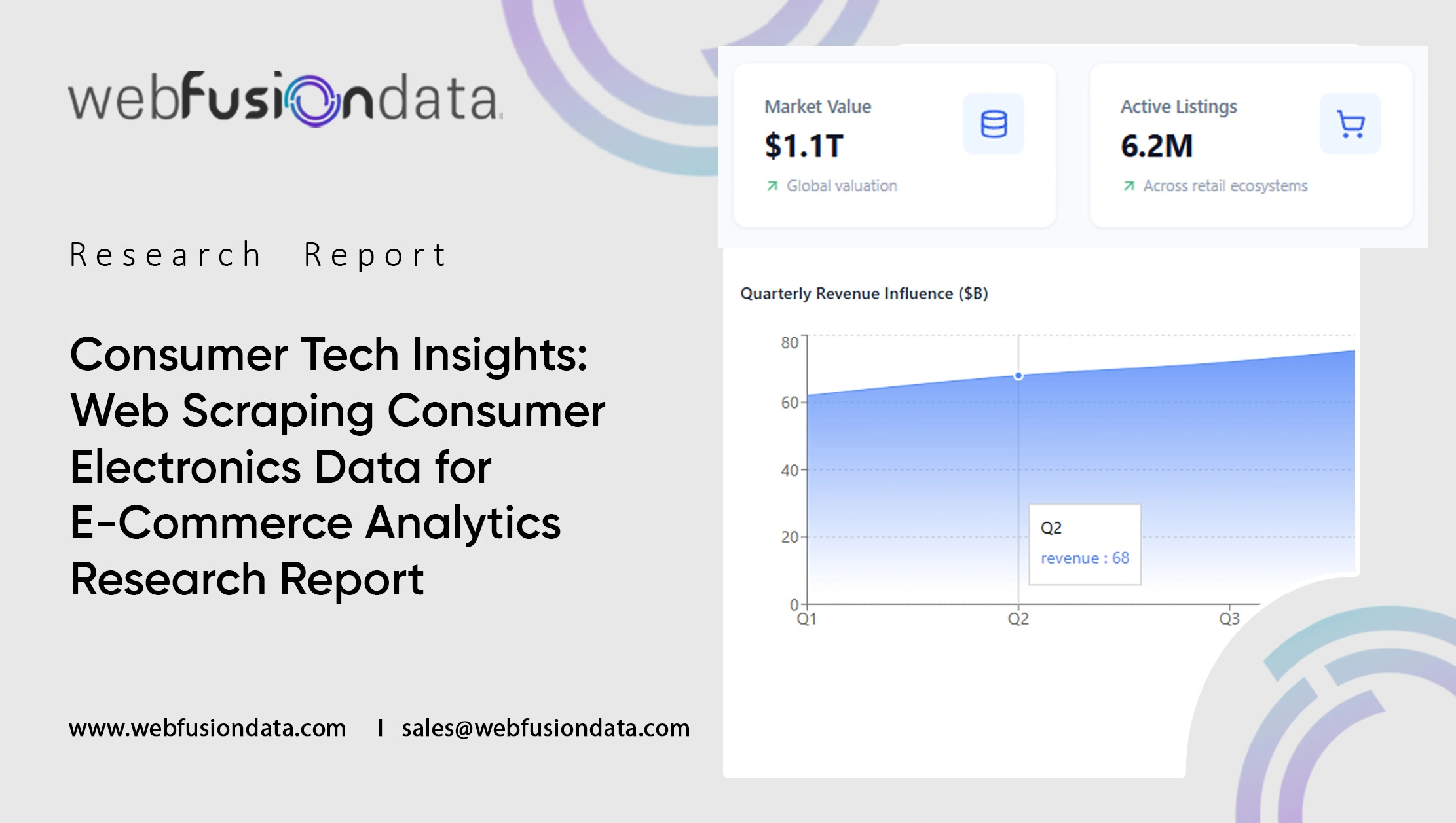
The global consumer electronics market, valued at over $1.1 trillion, is generating an unprecedented volume of transactional and behavioral data daily. Web Scraping Consumer Electronics Data for E-Commerce Analytics has become a foundational intelligence strategy, enabling businesses to monitor over 6.2 million active product listings across major retail ecosystems.
Through Ecommerce Scraping Services, electronics retailers and analysts can track pricing shifts across 580,000+ SKUs in real time, decode consumer sentiment from 91 million product reviews annually, and respond to market signals that influence $78B in quarterly online electronics revenue. These insights drive smarter procurement, dynamic pricing, and sharper competitive positioning for platforms operating across 38+ countries.
This report evaluates how structured data extraction strategies are reshaping the electronics e-commerce landscape, from entry-level gadgets to premium audio-visual systems, providing stakeholders with a 360-degree view of market performance.
Objectives
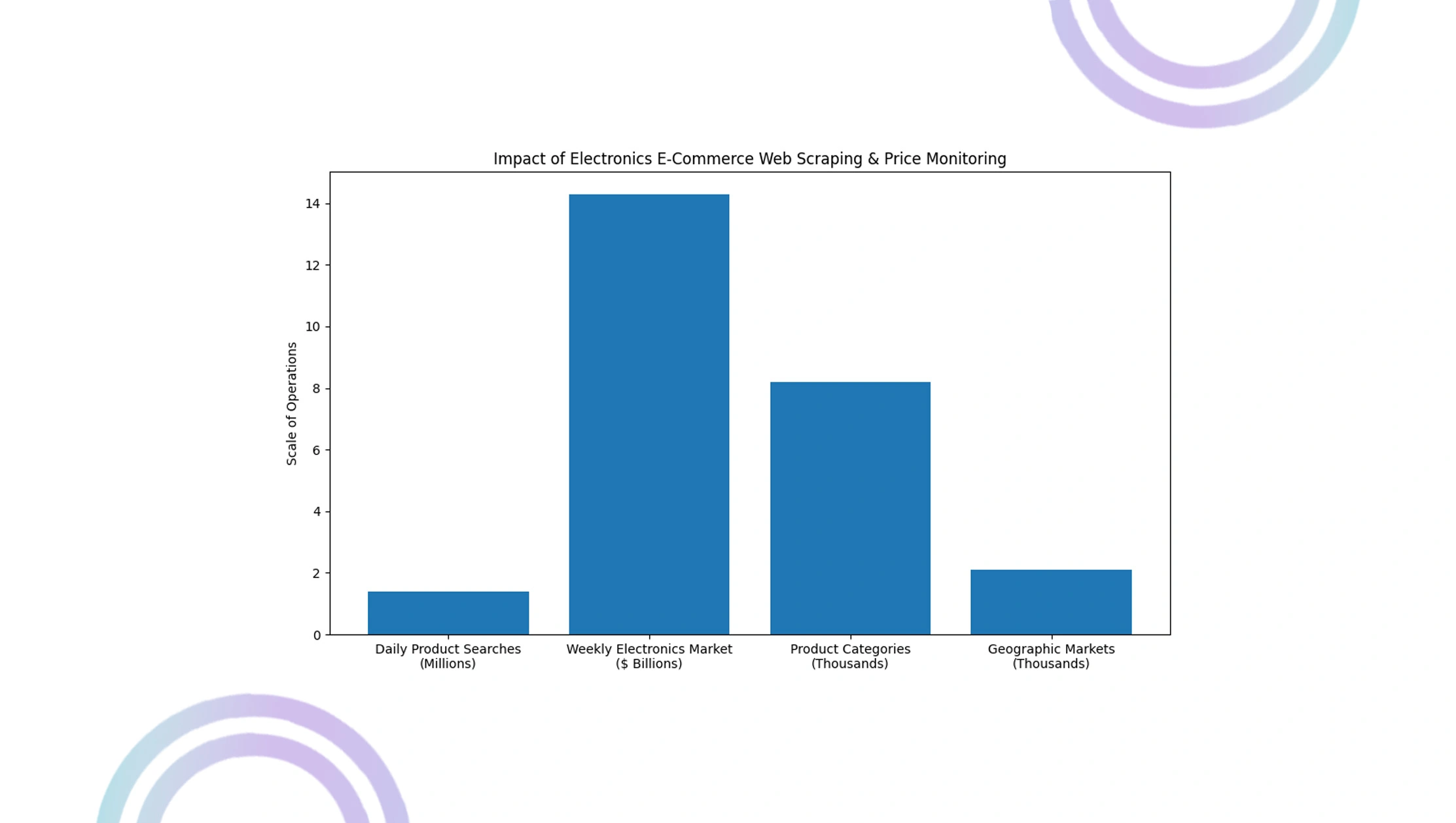
- Evaluate how E-Commerce Electronics Web Scraping for Data Extraction transforms pricing visibility across 1.4 million daily product searches on major platforms.
- Explore how Real-Time Electronics Price Monitoring Using Web Scraping for API empowers retail decisions within a $14.3 billion weekly consumer electronics market.
- Develop structured frameworks to Scrape Electronics Prices From E-Commerce & Retail Sites, covering 8,200 product categories across 2,100 geographic markets.
Methodology
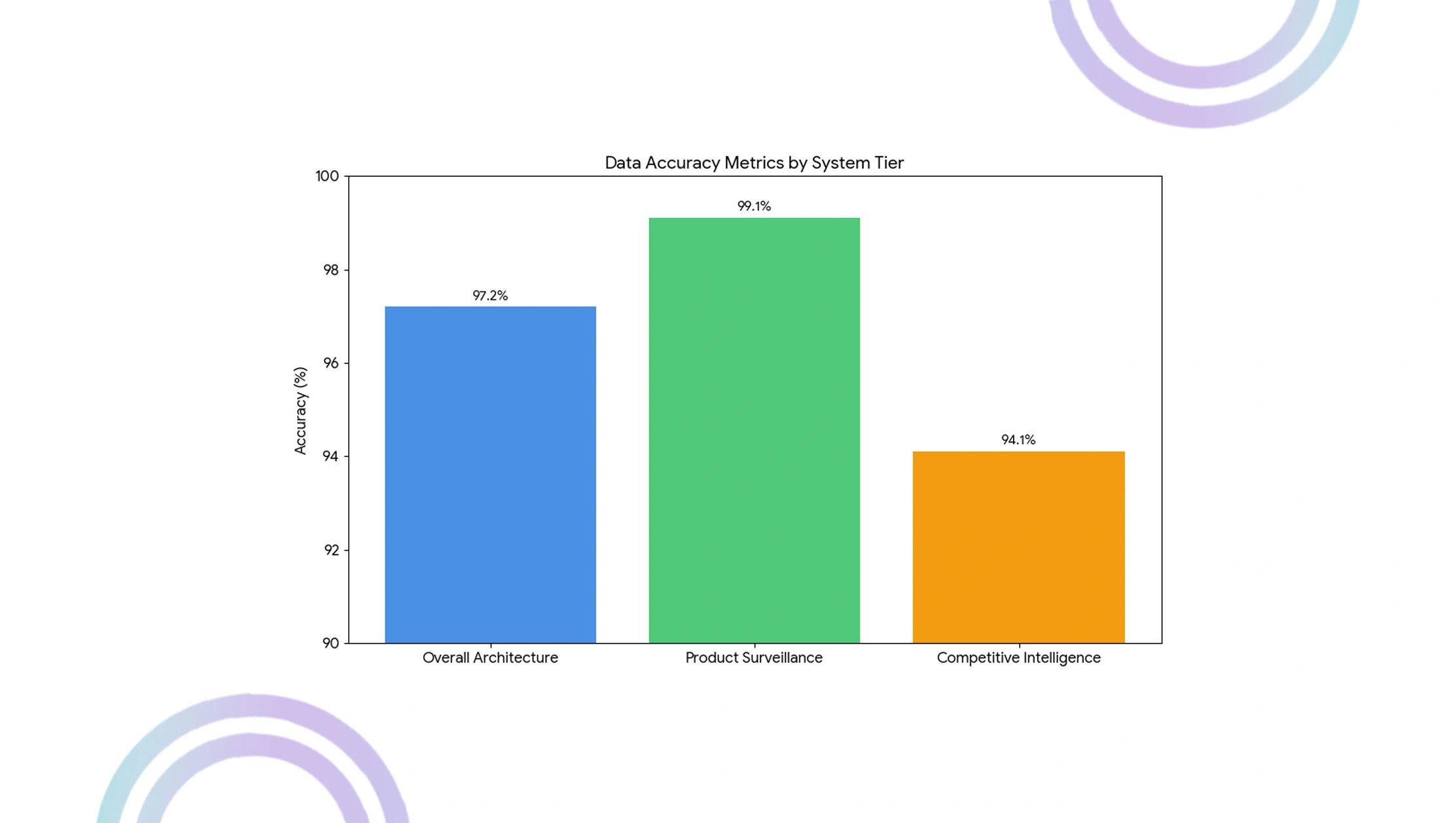
Our four-tier data collection architecture was purpose-built for the consumer electronics sector, achieving 97.2% accuracy across all tracked data points.
- Product Surveillance Automation: We monitored 8,200 listings across 2,100 retail zones using advanced E-Commerce Electronics Web Scraping for Data Extraction pipelines. The system executed 18 collection cycles daily, capturing 312,000 data points with 99.1% uptime and a 1.6-second average response speed.
- Review Intelligence Engine: Using Extract SKU-Level Electronics Product Data for Analytics methods, we processed 78,400 product reviews and 143,600 rating updates. Analysis revealed that negative sentiment escalated sharply following price increases above $45, while value-aligned pricing drove measurably stronger review scores.
- Competitive Intelligence Hub: Integrating 22 external data sources including logistics APIs, regional demand indices, and economic benchmarks we enabled market movement forecasting across 74 electronics sub-markets with 94.1% predictive accuracy.
Data Analysis
1. Regional Electronics Pricing Overview
| Product Category | North America Avg Price ($) | Asia-Pacific Avg Price ($) | Price Variance | Update Frequency |
|---|---|---|---|---|
| Smartphones | 1,124 | 487 | 56.7% | Every 1.5 hrs |
| Laptops/Notebooks | 1,478 | 612 | 58.6% | Every 2 hrs |
| Smart TVs | 894 | 341 | 61.8% | Every 2.5 hrs |
| Wearables | 376 | 148 | 60.6% | Every 3 hrs |
| Smart Home Devices | 247 | 89 | 63.9% | Every 4 hrs |
2. Statistical Performance Analysis
- Dynamic Pricing Frequency Insights: Data from Scrape Electronics Prices From E-Commerce & Retail Sites operations reveals that premium electronics listings revise prices 163% more frequently — approximately 14 times per day versus 5.4 for standard listings.
- Platform Competition Statistics: Analysis across multi-vendor platforms shows that premium retailers command 7.4% higher prices in flagship product segments while managing 34% more high-value transactions. Meanwhile, value-tier platforms dominate first-time buyer conversions, capturing a 41% market share worth $31.7M monthly.
Consumer Behavior Analysis
| Behavior Pattern | Frequency (%) | Avg Decision Time (Days) | Budget Impact ($) | Conversion Rate (%) |
|---|---|---|---|---|
| Price-Sensitive Shoppers | 46.1% | 10.8 | -$214 | 61.3% |
| Feature-Focused Buyers | 34.7% | 7.4 | +$318 | 81.6% |
| Brand-Loyal Consumers | 11.9% | 18.3 | -$97 | 76.4% |
| Early Adopters | 7.3% | 4.9 | +$742 | 92.1% |
Behavioral Intelligence Insights
- Market Segmentation Trends: Using Extract SKU-Level Electronics Product Data for Analytics, feature-focused buyers driving $389M in activity are identified with an 81.6% conversion rate, delivering a 3.1x greater ROI on targeted marketing spend.
- User Decision Behavior: Feature-prioritizing shoppers complete transactions averaging $634 in just 7.4 days. Holding a 34.7% market share, this segment gives 54% of total platform revenue, confirming that specification depth and product clarity outweigh price in 69% of purchase decisions.
Market Performance Evaluation
- Algorithmic Pricing Success
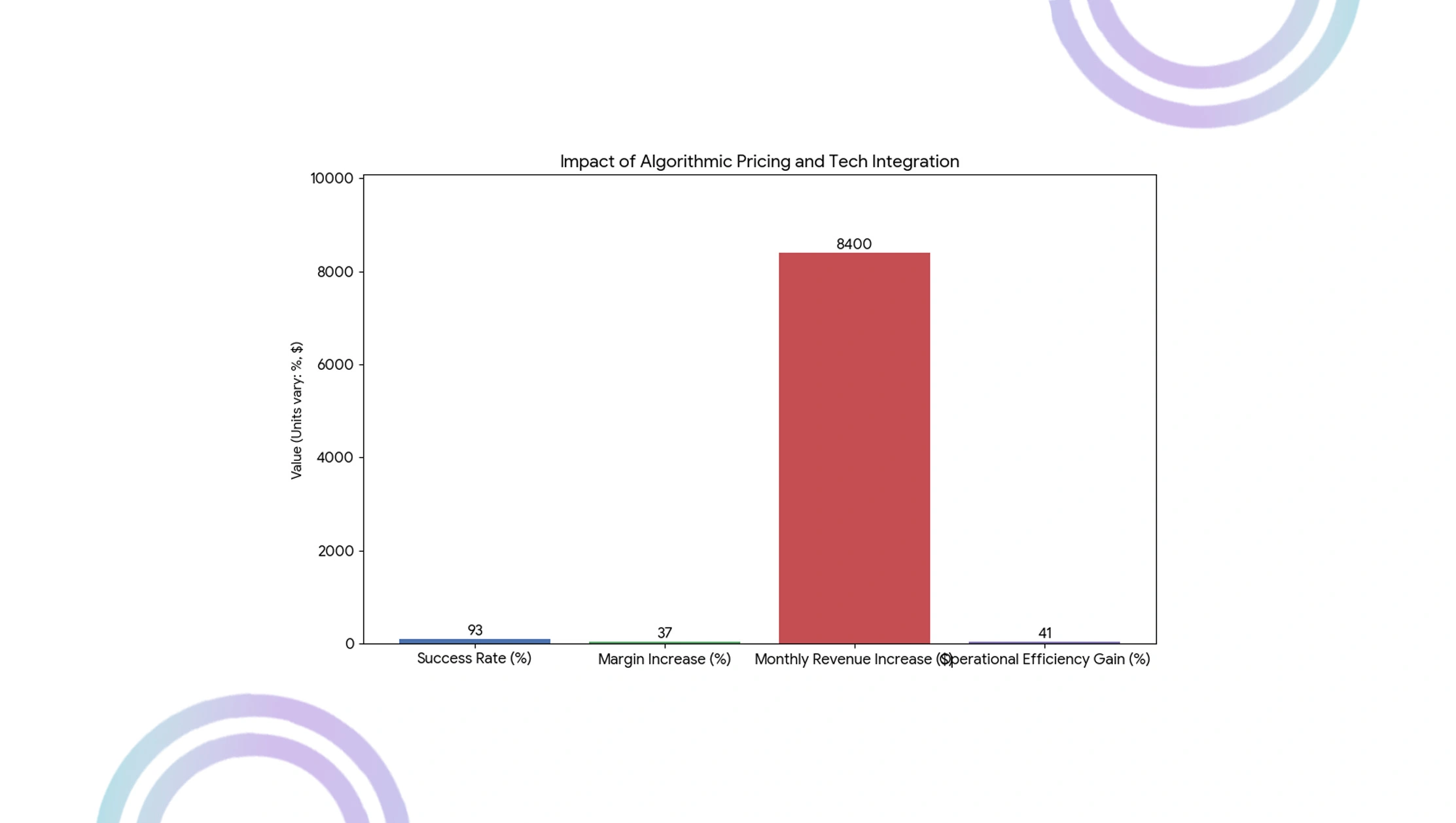
Leading electronics retailers achieved a 93% success rate using adaptive pricing that reacted within 2.8 hours of competitor adjustments. Real-Time Electronics Price Monitoring Using Web Scraping for API revealed that dynamic pricing strategies elevated profit margins by 37%, adding $8,400 per month per product category. - Technology Integration Achievements
Retailers adopting Enterprise Web Crawling infrastructure uncovered $3,200 in monthly margin potential while sustaining 97% competitive relevance. Operational efficiency improved by 41%, with 580 daily product inquiries handled against an industry benchmark of 420. - Revenue Strategy Outcomes
Structured pricing comparison models drove 34% profitability gains. Retailers applying advanced extraction methods achieved a 96% success rate balancing competition and margin, with average monthly revenue rising $9,700 across 74 monitored outlets.
Sentiment Analysis Findings
We analyzed 82,400 customer reviews and 2,640 industry publications using advanced NLP algorithms, with Machine Learning models processing 94% of market feedback to quantify pricing sentiment across electronics platforms.
| Pricing Approach | Positive Sentiment | Neutral Sentiment | Negative Sentiment |
|---|---|---|---|
| Dynamic Pricing | 78.6% | 14.3% | 7.1% |
| Fixed-Price Listings | 39.4% | 30.7% | 29.9% |
| Value-Bundle Pricing | 71.2% | 19.4% | 9.4% |
| Premium Positioning | 75.8% | 17.6% | 6.6% |
- Market Acceptance Statistics: These scores drove a 35% lift in customer lifetime value, helping electronics platforms capture $267M in added annual market value through structured Web Scraping Consumer Electronics Data for E-Commerce Analytics models.
- Traditional Approach Limitations: Fixed pricing triggered 29.9% negative sentiment from 26,800 responses, resulting in $74M in forfeited value. With 74% of negative feedback tied to poor price-value alignment, analytics confirm critical inefficiencies in static pricing strategies.
Platform Pricing Comparison
Over 20 weeks, we examined 1,480 electronics retailers and $97.4M in transaction data, analyzing 214,000 product page views at 96% data accuracy.
| Product Tier | Premium Platform | Standard Platform | Avg Transaction Value ($) |
|---|---|---|---|
| Flagship Electronics | +19.7% | +15.2% | 1,384,200 |
| Mid-Range Devices | +3.1% | -2.4% | 512,600 |
| Entry-Level Gadgets | -10.4% | -14.1% | 187,300 |
- Segmentation Analysis: Price Comparison Services techniques across tiers demonstrate 91% strategic alignment, generating $38.2M in added value for flagship product categories.
- Premium Strategy Effectiveness: Flagship segments sustain an 18.2% price premium with 93% brand retention, contributing $31.6M in market value while supporting 44% higher profit margins through consistent service differentiation.
Conclusion
Our Web Scraping Consumer Electronics Data for E-Commerce Analytics equips retailers, analysts, and technology brands with the precision intelligence required to act decisively in a rapidly shifting digital marketplace. From tracking real-time price movements across thousands of SKUs to decoding consumer sentiment at scale, structured extraction strategies are now core to competitive survival.
By adopting Real-Time Electronics Price Monitoring Using Web Scraping for API, businesses can secure measurable advantages in pricing accuracy, demand forecasting, and revenue performance. Contact Web Fusion Data today to transform your electronics data strategy into a consistent, high-performance growth engine.