Introduction
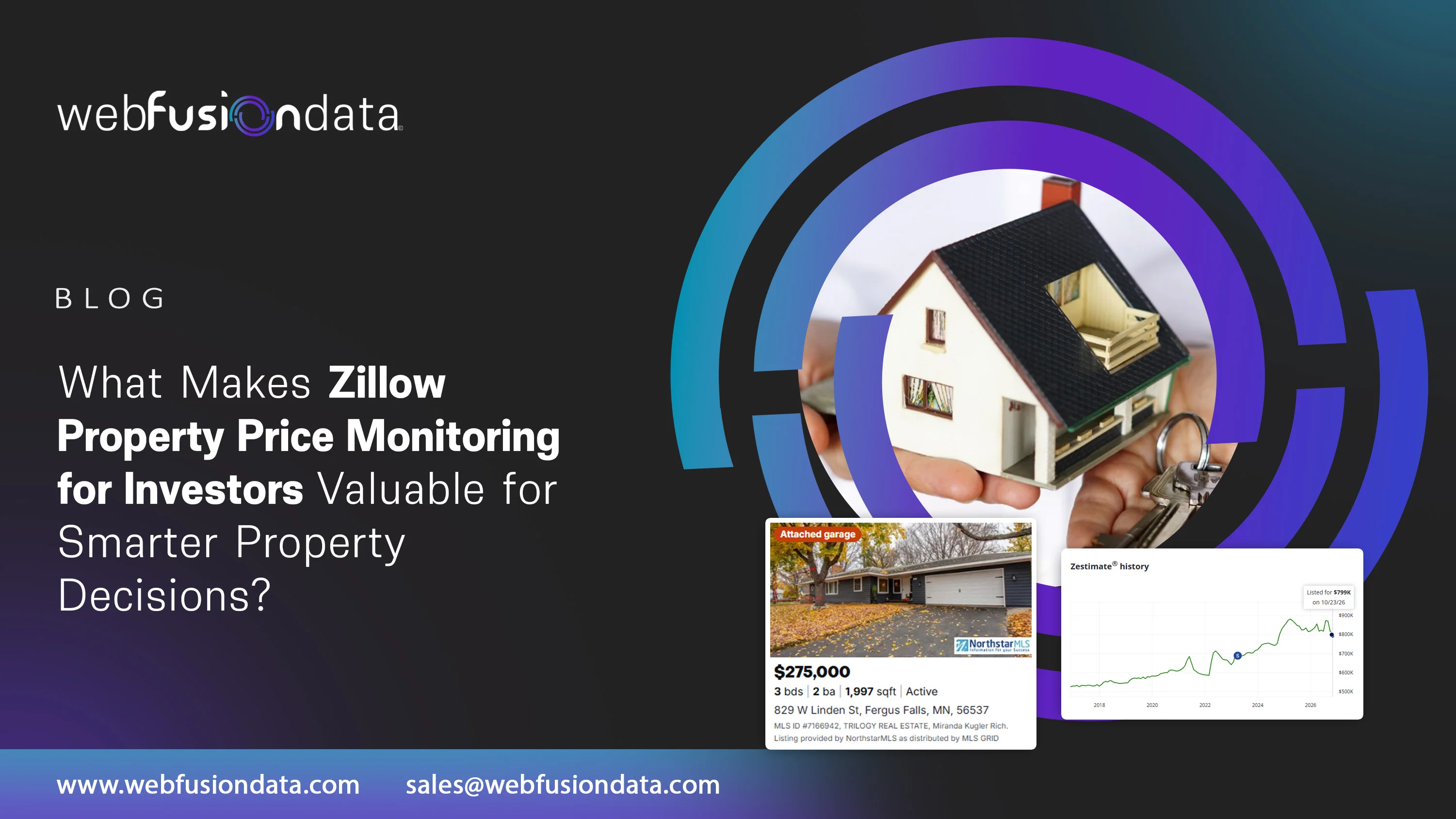
Modern real estate investing depends on tracking changing property values, historical price movements, and local market trends. Access to timely data helps investors avoid overpaying and identify promising opportunities. With Zillow Property Price Monitoring for Investors, portfolio managers can track undervalued listings and respond quickly to emerging market opportunities.
Property acquisition strategies depend heavily on accurate valuation models and historical appreciation rates. When investors track historical valuation shifts across target neighborhoods, they establish realistic benchmarks for future asset performance. Access to comprehensive trends transforms raw listing numbers into actionable insights for high-yielding acquisitions.Zillow
Utilizing specialized Property Price Tracking bridges the gap between raw market data and profitable purchasing decisions. Investors who monitor daily shifts gain a distinct advantage over manual researchers who rely on delayed public records. This digital approach ensures that every capital allocation decision rests on verified, current asset valuations.
Understanding Micro Market Trends And Historical Property Valuations
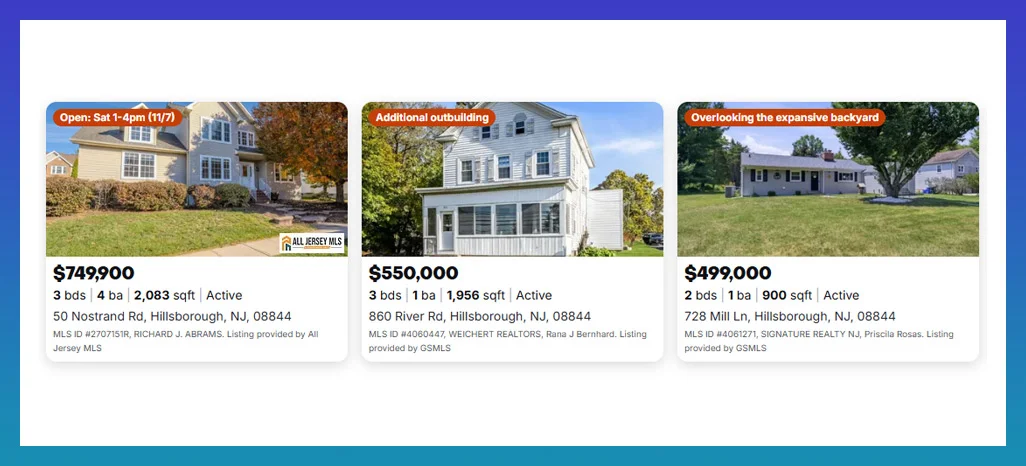
Deep market analysis requires examining how neighborhood values evolve over extended periods of time to ensure long-term capital preservation. Evaluating historical adjustments helps investors predict future appreciation rates and avoid overpaying for residential or commercial assets across competitive metropolitan areas. Evaluating Zillow Property Price Intelligence reveals hidden patterns in buyer demand, seasonal price drops, and seller flexibility across targeted zip codes.
Property acquisition professionals must evaluate macroeconomic factors alongside micro-level indicators to construct resilient investment portfolios that withstand economic downturns. Comprehensive research into local zoning laws, municipal development plans, and neighborhood demographic shifts provides essential context for modern portfolio managers. Market observers note that property values fluctuate significantly based on proximity to transit hubs, commercial centers, and quality educational institutions.
Statistical studies indicate that properties experiencing at least two price reductions within sixty days offer a negotiation margin averaging 7.4% below the final closing value. Investors leveraging systematic Zillow Property Price Monitoring for Investors capture these distressed listings within hours of publication. This rapid identification prevents capital from remaining tied up in overvalued properties and optimizes cash flow projections.
| Neighborhood Tier | Average Days on Market | Median Listing Price | Historical Price Drop Frequency |
|---|---|---|---|
| Urban Core | 24 Days | $485,000 | 12% |
| Suburban Growth | 45 Days | $330,000 | 28% |
| Rural / Exurban | 68 Days | $215,000 | 41% |
- Evaluate neighborhood zoning and municipal development plans before finalizing asset acquisition budgets.
- Analyze historical appreciation patterns across different demographic segments to forecast future demand.
- Monitor seasonal inventory fluctuations to identify optimal periods for entering target housing markets.
- Assess local employment growth rates and income levels to gauge long-term tenant stability.
- Compare historical price reduction frequencies across competing zip codes to find motivated sellers.
- Track municipal infrastructure projects that could positively impact future property valuations.
Portfolio diversification across multiple geographical regions further protects against localized economic shocks while maximizing overall yield generation. Advanced analytics platforms allow investment groups to benchmark regional performance against historical standards and broader economic indicators effortlessly.
Scaling Acquisition Workflows Through Automated Data Pipeline Architectures
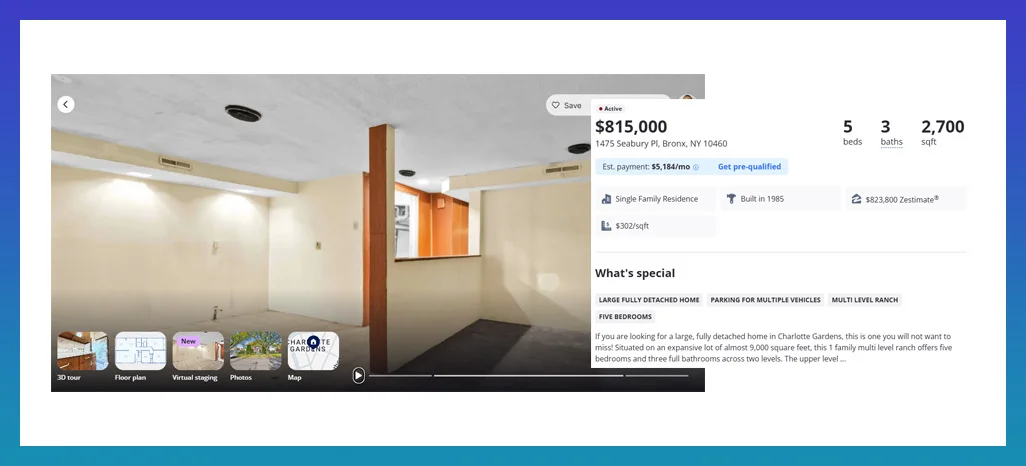
Manual property sourcing cannot keep pace with fast-moving metropolitan housing inventories and digital listing updates. Institutional portfolios require automated pipelines to aggregate millions of active listings and historical records daily without administrative delays. Deploying advanced Zillow Data Scraping Services enables firms to process massive volumes of property attributes, including square footage, lot size, and bedroom counts, without manual bottlenecks.
Automated validation checks property records against public tax assessments and municipal registries to remove duplicate listings and pricing errors. Through Zillow Property Data Scraping Services, analysts can use machine learning to classify property conditions based on listing descriptions and historical images, reducing manual screening time and helping identify unsuitable properties before physical inspections.
Market research shows that automated acquisition platforms reduce deal sourcing time by up to 65% compared to manual browsing methods. Incorporating Zillow Listing Price History Data Extraction allows quantitative analysts to backtest investment models against historical valuation swings. Consequently, acquisition managers can deploy capital with mathematical certainty rather than relying on intuition.
| Data Source Category | Processing Frequency | Record Volume (Monthly) | Accuracy Rate |
|---|---|---|---|
| Active MLS Feeds | Real-Time | 1,500,000+ | 98.5% |
| Aggregated Portals | Hourly | 3,200,000+ | 96.8% |
| Public Tax Records | Daily | 850,000+ | 99.1% |
- Establish custom data validation rules to ensure incoming listing records remain accurate and standardized.
- Integrate automated scraping schedules with existing customer relationship management software for seamless deal tracking.
- Utilize machine learning algorithms to categorize property conditions based on unstructured textual descriptions.
- Configure real-time notification alerts for properties meeting specific cap rate and pricing criteria.
- Maintain comprehensive audit logs of all historical property data modifications for compliance reporting.
- Scale data ingestion pipelines seamlessly as the geographic footprint of the investment portfolio expands.
Streamlining internal communication channels between data engineering teams and acquisition managers accelerates the entire property acquisition lifecycle significantly. Automated notification systems alert portfolio directors immediately when target assets meet specific capitalization rate and pricing thresholds.
Optimizing Portfolio Diversification Across Multi State Regional Markets
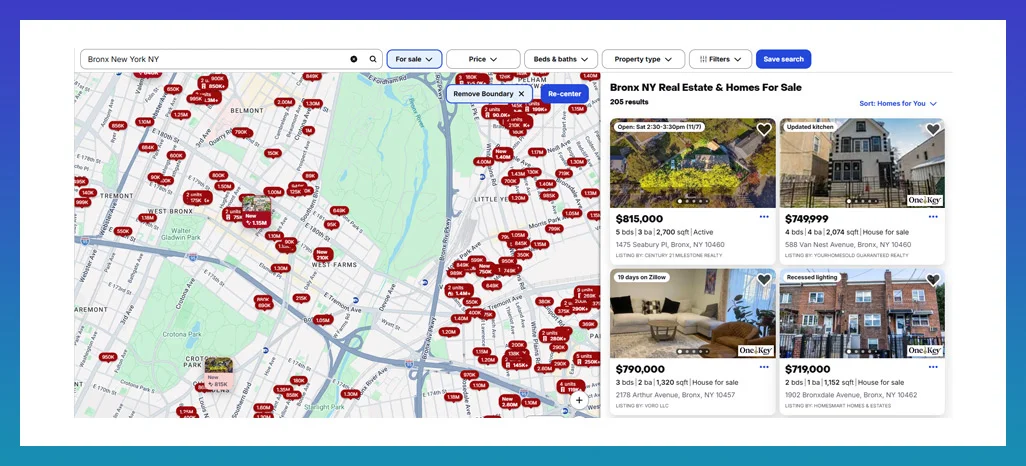
Diversifying real estate holdings across multiple geographical regions mitigates localized economic downturns and unexpected interest rate shocks effectively. Tracking disparate markets simultaneously requires robust digital infrastructure that aggregates localized inventory metrics into a centralized analytics dashboard. Utilizing Zillow Price Monitoring Solutions allows investors to compare capitalization rates, rental yields, and price-to-rent ratios across different states instantly.
Macroeconomic stability relies heavily on balancing capital allocation between high-growth metropolitan areas and stable secondary suburban markets. Investors must evaluate regional employment diversification, population migration patterns, and local tax policies before committing significant capital to new housing sectors. Comprehensive risk assessment models integrate these localized variables to calculate precise risk-adjusted returns for every prospective asset acquisition.
Data compiled from multi-market analyses demonstrate that portfolios diversified across three distinct economic zones experience 22% lower volatility during housing market corrections. Utilizing Zillow Property Listing Monitoring Across Us Markets ensures that regional price anomalies are identified and acted upon immediately.
| Region Target | Average Gross Yield | Inventory Turnover Rate | Risk Index Score |
|---|---|---|---|
| Sunbelt Region | 8.2% | Fast (Under 30 Days) | Moderate |
| Midwest Suburbs | 9.5% | Moderate (31-50 Days) | Low-Moderate |
| Northeast Metro | 5.1% | Slow (51+ Days) | Low |
- Monitor regional demographic migration patterns to identify emerging high-yield real estate markets early.
- Analyze local tax policies and regulatory updates across multiple states to safeguard net operating income.
- Rebalance portfolio asset allocation dynamically based on shifting regional economic indicators and risk scores.
- Track municipal zoning changes that could impact future development potential and property valuations.
- Evaluate local employment diversification indexes to minimize tenant default risks during economic downturns.
- Assess regional infrastructure investments to predict long-term capital appreciation trends accurately.
Continuous portfolio rebalancing ensures that capital is dynamically reallocated toward regions offering superior risk-adjusted returns and strong demographic tailwinds. Strategic asset management teams rely on comprehensive regional intelligence reports to optimize long-term exit strategies and maximize net operating income.
How Web Fusion Data Can Help You?
Operational success in modern real estate investment depends on seamless data integration and real-time market visibility. Effective Zillow Property Price Monitoring for Investors bridges this gap by delivering clean, structured intelligence directly to analytical dashboards and acquisition software.
Implementing custom data solutions allows firms to focus capital allocation strategies on high-yielding assets while eliminating manual research overhead.
- Establish custom extraction schedules tailored to specific regional expansion goals and target acquisition criteria.
- Convert raw web listings into clean, standardized formats compatible with enterprise business intelligence software.
- Monitor historical pricing adjustments and days-on-market metrics across thousands of active properties simultaneously.
- Track micro-market inventory fluctuations to identify emerging neighborhoods before broad market recognition occurs.
- Integrate automated alert systems for sudden price drops and motivated seller adjustments on targeted properties.
- Scale portfolio analysis securely without expanding internal data entry or manual research headcount.
Organizations requiring comprehensive market intelligence benefit significantly from utilizing a robust Real Estate Scraping API to maintain a competitive acquisition edge.
Conclusion
Navigating today's competitive real estate landscape requires continuous access to precise, granular property intelligence. Investors who rely on static reports often miss vital market shifts and lucrative pricing adjustments. Implementing Zillow Property Price Monitoring for Investors ensures that every acquisition decision is backed by verified, up-to-date market realities.
Sustained portfolio growth depends on adopting professional Real Estate Investment Data Provider networks that streamline data collection and analysis. By transforming raw housing data into actionable insights, firms secure long-term profitability and market dominance. Start optimizing your property acquisition strategy today with Web Fusion Data by integrating advanced market tracking solutions.