Introduction
India’s digital dining sector is expanding rapidly, with platforms like District by Zomato and Zomato Dining reshaping how consumers book tables. Restaurants frequently adjust percentage discounts, bank offers, and flat cashback incentives across these apps. Understanding these frequent shifts requires structured data extraction rather than manual checking.
Businesses often rely on Zomato Data Scraping Services alongside specialized extraction frameworks to track shifting dining incentives. Collecting real-time promotional metrics helps hospitality brands, aggregators, and market analysts measure how different platforms position partner restaurants. Accurate datasets reveal hidden pricing patterns across major metropolitan dining hubs.
Implementing automated Dine-in Deals Data Scraping enables organizations to evaluate discount structures side by side. By capturing live coupon codes, minimum spend thresholds, and seasonal campaign durations, decision-makers can benchmark platform performance and optimize their own promotional strategies with measurable precision.
Evaluating Platform Discount Mechanics Across District and Zomato Ecosystems
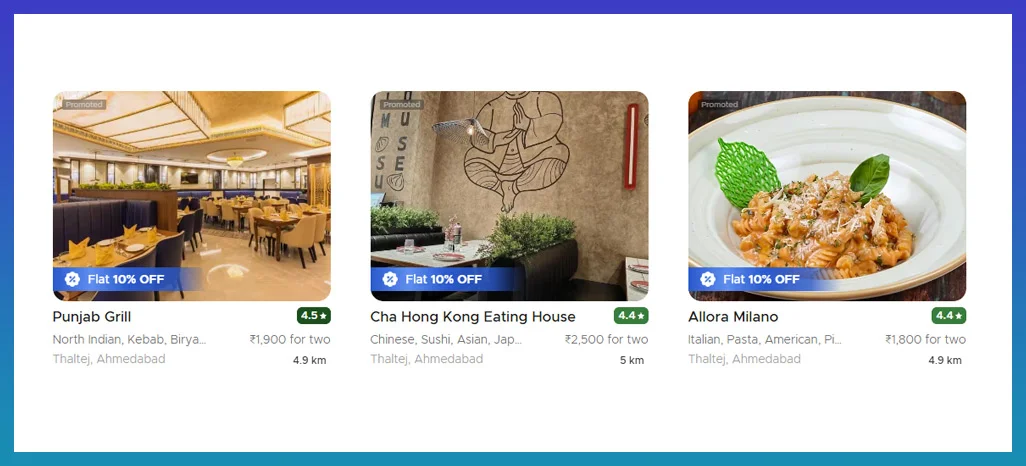
Comparing promotional structures between District and Zomato requires deep visibility into how each ecosystem constructs consumer incentives. Zomato Dining frequently emphasizes flat percentage discounts paired with instant payment gateway cashbacks, whereas District highlights curated dining experiences, event-linked table bookings, and exclusive bank-partner privileges across major urban hubs.
Recent industry benchmarks indicate that over 68% of urban diners in Tier-1 Indian cities compare promotional listings across multiple apps before finalizing a reservation. By integrating Restaurant Data Intelligence into their operational workflows, hospitality analysts can systematically categorize these variations across thousands of listed venues without manual effort.
Furthermore, restaurants running simultaneous promotions on both platforms adjust discount tiers an average of 3.4 times per month to balance footfall and profit margins. Utilizing District and Zomato Deal Tracking allows brands to quantify which platform drives higher perceived value during peak weekend hours versus quieter weekday lunch slots.
- Captures flat percentage reductions alongside instant UPI and credit card cashback structures.
- Identifies minimum bill thresholds and maximum discount caps across different dining time slots.
- Measures promotional frequency shifts between weekday lunch hours and high-demand weekend evenings.
| Metric Category | Zomato Dining Offers | District Dining Offers | Analytical Impact |
|---|---|---|---|
| Primary Discount Type | Flat % off + UPI/Card cashbacks | Curated table deals + Bank privileges | Identifies platform-specific customer acquisition tactics |
| Update Frequency | High (Dynamic daily/weekly shifts) | Moderate (Event and weekend-driven) | Tracks promotional volatility across dining categories |
| Average Discount Range | 15% to 40% off total bill | 20% to 50% off select experiences | Benchmarks margin sacrifice against table occupancy |
| Redemption Conditions | Minimum bill value & time-slot caps | Pre-booking & partner card eligibility | Evaluates friction points in user conversion |
Understanding these subtle pricing shifts helps revenue managers allocate marketing budgets toward the highest-converting dining channels. Incorporating Restaurant Discount and Offer Monitoring ensures teams spot seasonal campaign patterns early while protecting baseline unit economics across every outlet.
Automating Competitive Benchmarking for Hospitality Brands Across Dining Platforms
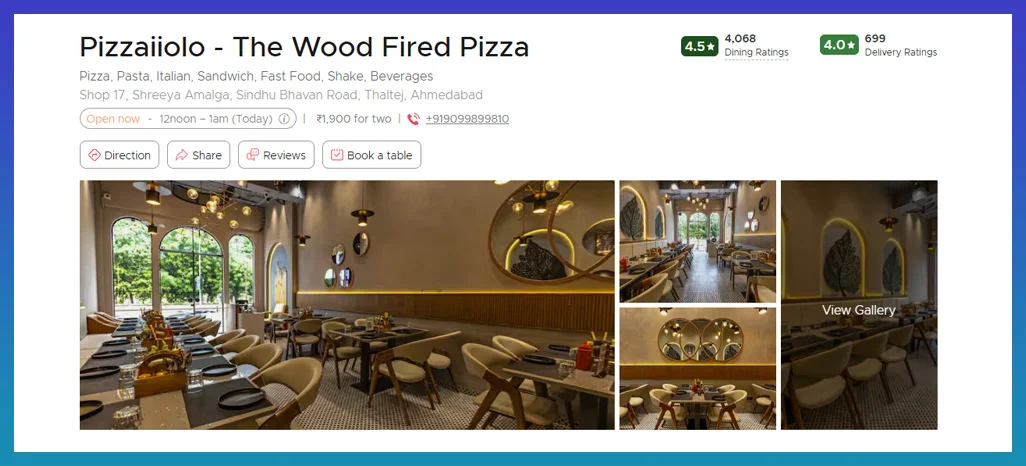
Manual tracking of restaurant promotions across multiple neighborhoods and cuisine categories is slow, fragmented, and prone to human error. Automated Restaurant Offers Data Scraping eliminates operational blind spots by continuously capturing menu-level deals, festive buffets, and loyalty perks in real time across competing platforms.
Data from food-tech market studies shows that restaurants benchmarking competitor discounts weekly achieve up to 22% higher table turnover during off-peak hours compared to static-pricing peers. Hospitality groups rely on Pricing and Promotion Services to align their promotional calendars with local market demand without eroding unit economics.
Moreover, nearly 54% of mid-scale casual dining chains modify their platform-specific offers within 48 hours of a nearby competitor launching a major campaign. Combining Zomato Dining Offers Tracking with granular historical archives equips revenue managers with side-by-side trend lines, ensuring every promotional adjustment is backed by verified market evidence.
- Eliminates manual spreadsheet errors by validating thousands of daily listing updates automatically.
- Tracks flash weekend discounts and limited-time happy-hour menus across competing neighborhoods.
- Builds historical time-series datasets to forecast festive demand spikes and seasonal pricing cycles.
| Benchmarking Dimension | Manual Monitoring | Automated Extraction | Strategic Advantage |
|---|---|---|---|
| Coverage Scale | 20–50 local listings per week | 10,000+ listings daily across cities | Enables macro and micro-market visibility |
| Data Accuracy | Prone to missed flash deals | 99%+ structured field validation | Captures short-lived weekend and happy-hour offers |
| Historical Trend Depth | Limited to ad-hoc spreadsheets | Continuous time-series repositories | Reveals seasonal discounting cycles and festive spikes |
| Response Latency | 5–7 days to notice competitor shifts | Near real-time alerts and feeds | Supports agile counter-promotions and pricing updates |
Sustaining high occupancy rates requires rapid visibility into how rival outlets position combo meals and pre-booked dining packages. Adopting District Dining Offers Scraping gives multi-outlet brands a unified view of local promotional aggression before customer traffic shifts away.
Building Scalable Technical Architecture for Real-Time Dining Offer Integration
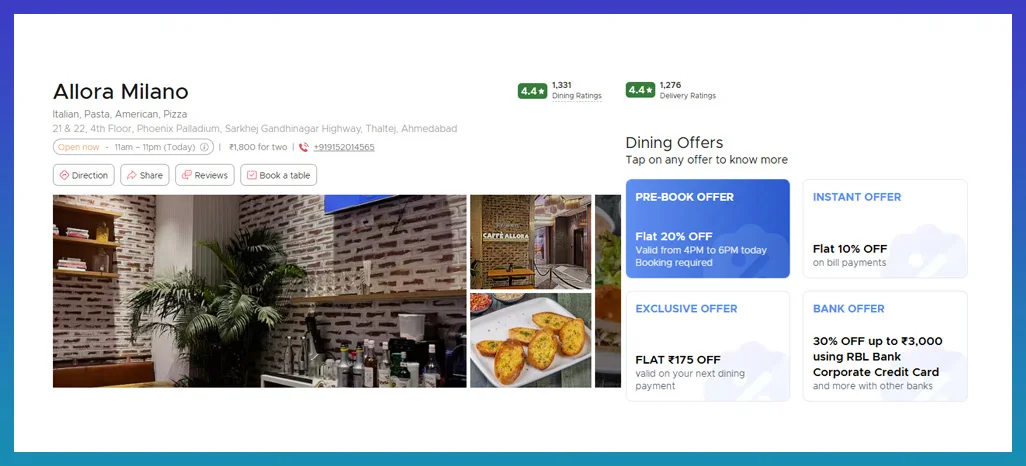
Extracting structured dining deal information at scale requires resilient infrastructure capable of handling dynamic page rendering, geo-location parameters, and anti-bot protections. Modern Web Scraping Solutions normalize disparate HTML structures from District and Zomato into unified, machine-readable schemas such as JSON or CSV for seamless analytics ingestion.
Enterprise analytics teams report that integrating automated feeds reduces data preparation time by 75%, allowing analysts to focus on predictive modeling rather than cleaning raw text. Platforms utilizing Dine-in Discount Tracking alongside Restaurant Offer Data API pipelines experience 40% faster campaign deployment cycles across regional dining markets.
Connecting live extraction feeds directly into internal business intelligence dashboards ensures pricing teams never work with outdated promotional records. Pairing Restaurant Promotion Tracking with automated webhook alerts enables instant notifications whenever major aggregator platforms launch city-wide dining festivals.
- Routes requests through city-specific proxies to capture accurate neighborhood-level dining deals.
- Standardizes discount percentages, maximum caps, and bank partner rules into clean database fields.
- Delivers continuous data streams via REST endpoints directly into enterprise BI visualization tools.
| Technical Feature | Standard Scraping Setup | Enterprise Data Pipeline | Business Outcome |
|---|---|---|---|
| Geo-Targeting | Single city or static PIN code | Multi-city, neighborhood-level proxies | Captures hyper-local offer variations accurately |
| Data Delivery | Manual file downloads | Automated webhooks & REST endpoints | Feeds BI tools and pricing models without delay |
| Schema Normalization | Raw, unformatted text strings | Standardized fields (Discount %, Cap, Bank) | Simplifies cross-platform comparison queries |
| Uptime & Maintenance | Frequent breaks on UI updates | Automated parser self-healing | Guarantees uninterrupted daily market feeds |
Transforming raw listing pages into clean, structured intelligence empowers hospitality executives to make confident expansion and partnership decisions. Embedding Restaurant Competitor Offer Analysis into daily reporting workflows turns complex platform ecosystems into a measurable commercial advantage.
How Web Fusion Data Can Help You?
Building and maintaining reliable extraction pipelines across evolving food-tech platforms demands specialized engineering expertise. We deliver customized Dine-in Deals Data Scraping workflows tailored to hospitality chains, market research firms, and food-tech aggregators.
Our managed Food Scraping API handles geo-targeted proxy rotation, anti-blocking protocols, and automated schema validation so your teams receive clean, ready-to-analyze datasets on schedule.
- Delivers structured JSON, CSV, or Excel datasets formatted directly for your internal analytics tools.
- Captures hyper-local promotional variations across specific cities, neighborhoods, and dining zones.
- Monitors percentage discounts, bank card privileges, minimum spend limits, and validity windows accurately.
- Scales effortlessly from hundreds of local outlets to nationwide restaurant directories without downtime.
- Adapts rapidly to platform layout updates through continuous automated parser monitoring and maintenance.
- Provides dedicated technical support and flexible delivery schedules aligned with your reporting cycles.
By integrating us into your analytics stack, your organization gains dependable Restaurant Competitor Offer Analysis that turns complex dining platform ecosystems into clear, actionable business intelligence.
Conclusion
Navigating the competitive landscape of digital table reservations requires more than surface-level observation. Reliable Dine-in Deals Data Scraping bridges the information gap between District and Zomato, giving hospitality brands and analysts complete clarity into discount frequencies, bank partnerships, and seasonal promotional shifts.
Through structured District and Zomato Deal Tracking, businesses can evaluate how different platforms drive customer footfall while protecting their profit margins against aggressive discounting. Partner with Web Fusion Data today to transform live dining deal intelligence into smarter pricing strategies and measurable revenue growth.